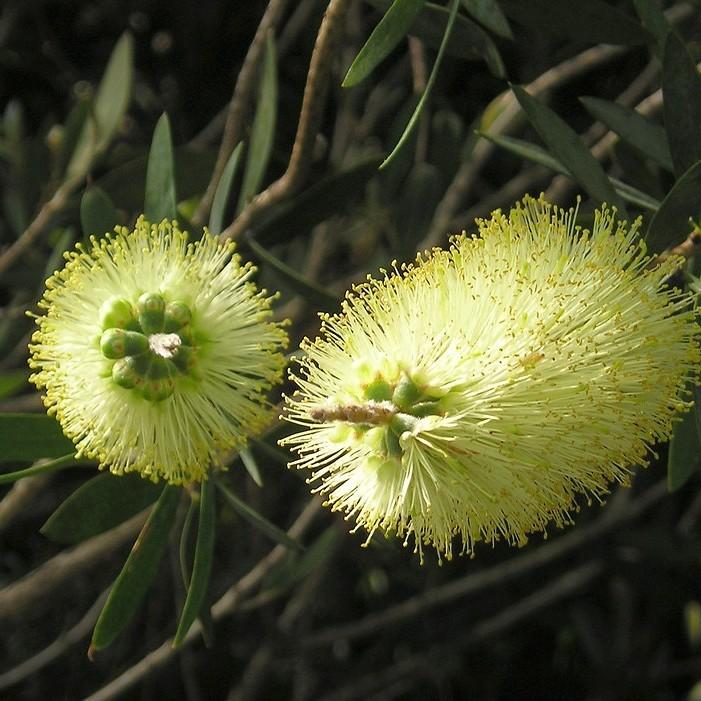
lemon bottlebrush
Callistemon pallidus
Overview
The lemon bottlebrush (Callistemon pallidus) is an extraordinary evergreen shrub that deserves special mention for it’s striking beauty. It is a great choice for many landscapes because it is a hardy specimen, growing in many sandy, sunny locations. This Australian native is a fast grower, reaching heights up to 15 feet and stands out with its interesting, grey-green foliage and its spectacular yellow flower brushes. This plant is also an excellent attractor of birds, becoming a great addition to any bird garden. Overall, the lemon bottlebrush will enhance any garden with its showy, volcanic-like blooms and its distinctive foliage. It's an amazing shrub that will bring a unique charm and character to your outdoor spaces.
Care Guide
Watering
Water the lemon bottlebrush every 7-10 days. Provide enough water to thoroughly saturate the root system but avoid over-watering, allowing the soil to dry out between waterings. Lemon bottlebrush prefers consistently moist soil and should not be allowed to dry out completely. In late summer and fall, reduce watering to encourage the plant to enter dormancy with minimal stress.
Light
The lemon bottlebrush prefers full sun, and does best in areas where it will receive at least 6 to 8 hours of direct sunlight each day. To achieve optimal growth, the plant should be placed in an area that will receive direct sun in the morning, before 10am, and in the late afternoon and early evening, after 4pm. During midday, when the sun is the most intense, the leaves of the plant should be shaded to protect from sunburn. This species is also very drought tolerant, and should not be over watered.
Temperature
Hardiness zone 7-10.
Pruning
Lemon bottlebrush should be pruned in late spring or early summer, usually when the new growth starts to appear. To prune, remove any dead, diseased, or damaged branches, as well as any weak, spindly growth. Cut away any suckers coming from the base of the plant with a pair of clean pruning shears. Cut back the tallest branches to just above a pair of healthy buds, cutting to a perfect angle so that the water won't collect and create disease on the cut surface. Pruning should only remove up to a third of the total topgrowth. This will improve the overall shape of the plant and help keep it neat and tidy.
Propagation
Cutting, Grafting Propagation, Air Layering Propagation, Seed Propagation
Related plants
Other plants you might like if you grow lemon bottlebrush.