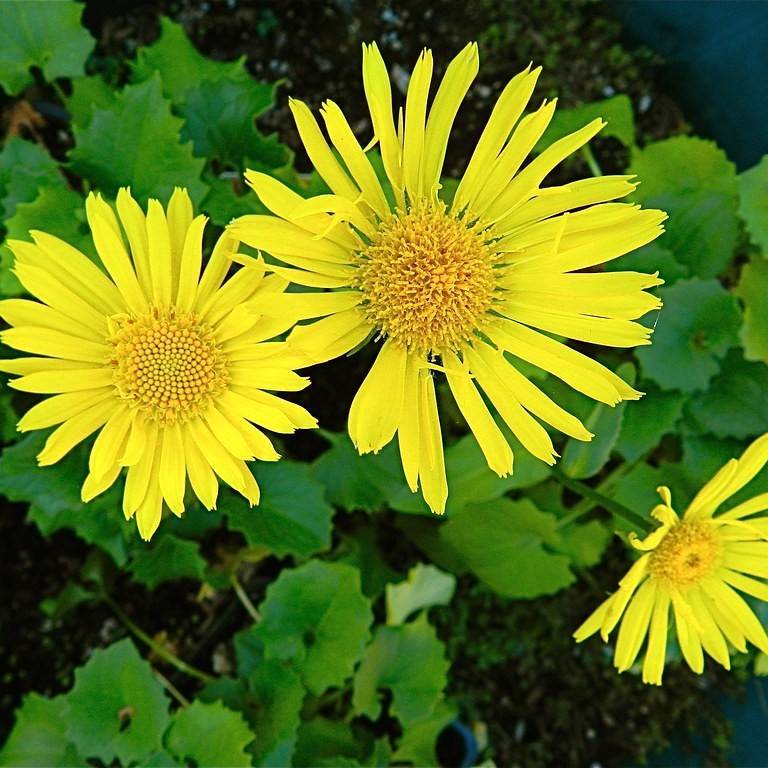
leopard's bane
Doronicum 'Little Leo'
Overview
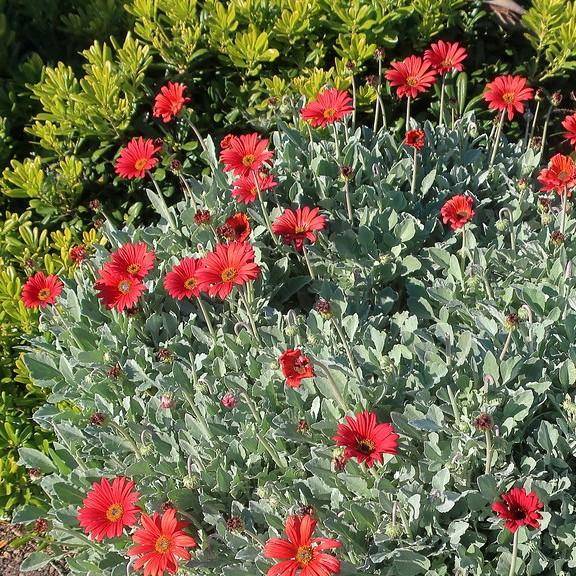
Leopard's Bane (Doronicum 'Little Leo') is an amazing perennial plant with beautiful blooms. Its daisy-like yellow flowers with dark maroon centers reach heights of 12-18 inches, covering the entire plant. Its foliage is a lush dark green and sports strong triangular shaped leaves. Little Leo is easy to grow in sunny locations with well-drained soils and provides a stunning display throughout the summer. It is an ideal choice for garden borders, pollinator-friendly gardens, and even as a cut flower indoors. One of its best features is its unique spotted leaves, resembling the fur of a small leopard- an added bonus to its beauty.
Care Guide
Watering
Leopard's bane (Doronicum 'Little Leo') should be watered deeply on a weekly basis. Water should be applied until the soil is moist, but not soggy. Allow the top 3-4 inches of soil to dry out between watering. During the growing season (spring and summer) the soil should be kept consistently moist. In the winter, the plant should be watered less frequently. Watering should be stopped when the weather is cold and frost is expected.
Light
Leopard's Bane (Doronicum 'Little Leo') prefers full sun, which means 6 or more hours of direct sunlight per day. If the plant receives less than 6 hours of direct sunlight per day, it will lack vigor and won’t flower as well. The best time of day for it to get the most light is in the early morning when the sun is rising.
Temperature
Hardiness zone 4-7.
Pruning
Leopard's bane (Doronicum 'Little Leo') should be pruned no later than early spring each year. Pruning should be minimal, limited mainly to deadheading of old flower stalks right after flowering is complete. If the plant has outgrown its desired size, light pruning can be done to shape the plant. Avoid cutting off more than 1-third of the plant's foliage in a single season as this may be too much for the plant to recover from. Additional pruning can be done during late summer after flowering has finished, such as cutting away any straggly branches that don't fit in with the desired shape of the plant.
Propagation
Division, Cutting, Layering Propagation, Seed Propagation
Uses & Symbolism
Attracts: Butterflies.
Related plants
Other plants you might like if you grow leopard's bane.