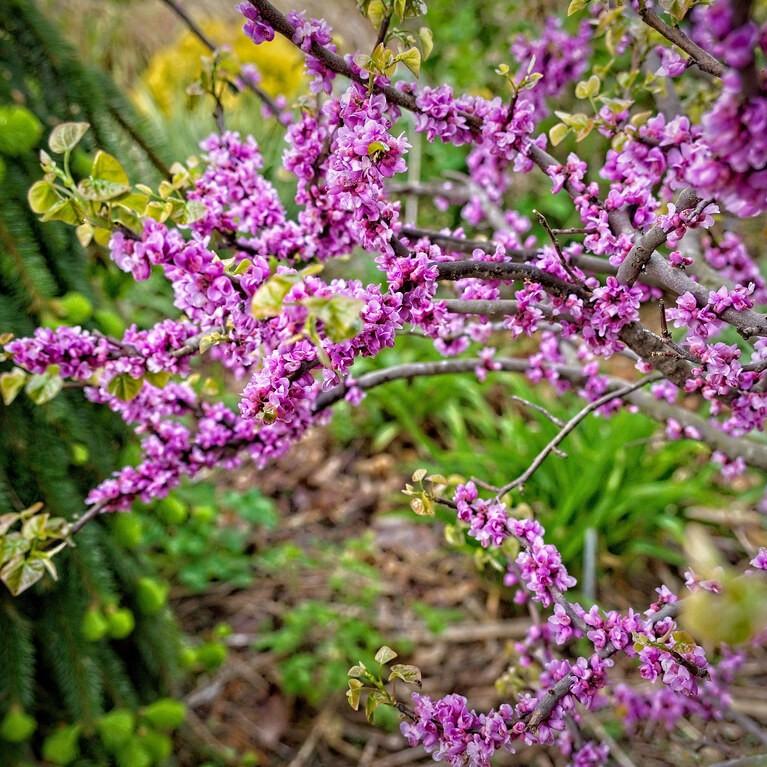
Little Woody Redbud
Cercis canadensis 'Little Woody'
Overview
The Little Woody Redbud (Cercis canadensis 'Little Woody') is truly a wonderful plant! It is one of the most ornamental deciduous trees and is known for its fabulous explosion of rosy-red flowers in early spring. It has vibrant green foliage in summer and gorgeous yellow-crimson coloring in fall. Its compact form and delightful aroma make it an ideal addition to any garden. The Little Woody Redbud offers a wide range of environmental benefits, from providing shelter and food for wildlife to helping to protect soils from more damaging runoff. In addition, it makes a great host for pollinators and a great species for reforestation projects. Truly, this incredible tree is amazing and deserves a place in everyone's yard.
Care Guide
Watering
Little Woody Redbud plants should be watered regularly to keep the soil moist, but not soggy. Water the plants deeply, but not more than once a week, and make sure the soil is dry to the touch before you water again. During the summer months, Redbud plants may need to be watered more frequently than once a week, especially during periods of hot, dry weather. In this case, check the soil’s moisture twice a week and water as needed. The plant will benefit from an occasional deep soaking.
Light
Little Woody Redbud trees should receive at least 6 hours of direct sunlight per day in order to thrive. They prefer to be planted in full sun, although they can tolerate partial shade for part of the day, allowing for some respite from the hot summer sun during the hottest months. The Little Woody Redbud can benefit from some morning sun and shade in the afternoon.
Soil
Humus rich, Well-drained
Temperature
Hardiness zone 5-5.
Pruning
Little Woody Redbud (Cercis canadensis 'Little Woody') requires minimal pruning. The best time to prune is in late winter or early spring before new growth begins. This species can be pruned to maintain a desired shape or size. Any dead or damaged branches should be removed and can also be lightly pruned to shape the tree. It is also important to thin out any overcrowded branches to allow for proper air circulation. Prune no more than 1-third of the tree’s foliage in any 1 season.
Propagation
Seed Propagation, Grafting Propagation
Uses & Symbolism
Attracts: Butterflies.
Diseases & Pests
Common pests: Canker, sap rot, Scale insects, Wilt.
Related plants
Other plants you might like if you grow Little Woody Redbud.