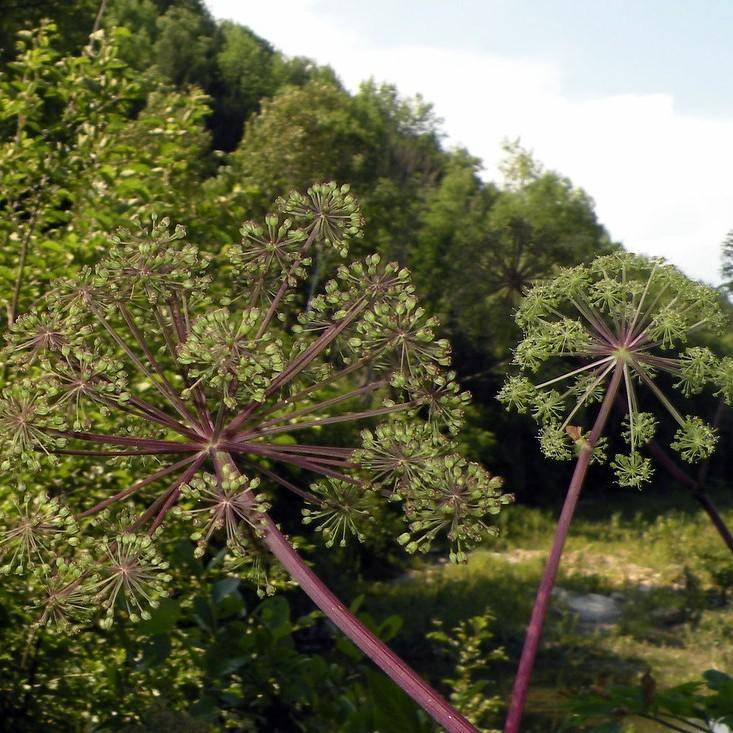
masterwort
Angelica atropurpurea
Overview
Masterwort (Angelica atropurpurea) is an amazing plant that adds beauty and texture to any garden. This perennial herb has large clusters of striking, flat umbels of cream-colored flowers that bloom in summer, often with dark-purple, winged stems and lacy leaves. Its bright, showy flowers attract a variety of pollinators, such as bees, butterflies, and hummingbirds, making it a favorite among gardeners. It is also known for its unique scent that has sweet, herbal, and spicy tones, making it popular for use in perfumes. Masterwort is easy to care for, even in colder climates, and makes a great addition to any garden.
Care Guide
Watering
Masterwort should be watered frequently during the growing season. A deep, thorough watering once or twice a week is ideal. Water thoroughly until the soil is moist and then allow the top inch or 2 of soil to dry out before watering again. Reduce watering frequency to once a month during the winter when the plant is dormant.
Light
The amount of sunlight that masterwort needs depends on its location, as some plants may need more than others. For example, those growing in a sunny location will need more sunlight than those growing in a shady spot. Generally, masterwort can tolerate extended periods of partial shade but will bloom best in full sun. This species should get at least 6 hours of direct sunlight each day, ideally during the time of the day when light is at its strongest (usually morning or late afternoon). It is important to avoid exposing masterwort to direct sunlight during the hottest part of the day, particularly during summer. If this happens, it can cause scorching of the leaves.
Soil
Clay, Sand, Loam
Temperature
Hardiness zone 4-7.
Pruning
Masterwort should be pruned at the end of the blooming season, usually in late summer or early fall. This will help shape the plant and promote a bushier and more compact form. The size of the pruning cuts should depend on the height of the plant. Smaller plants should have lighter pruning while larger plants can endure a heftier trim. In general, about 1-third of the growing tips should be pruned to encourage plant growth. If the plant becomes too large and overgrown, heavy pruning can be considered.
Propagation
Division, Cutting, Seed Propagation, Layering Propagation
Uses & Symbolism
Attracts: Butterfly Larvae.
Related plants
Other plants you might like if you grow masterwort.







