Mediterranean hackberry
Celtis australis
Overview
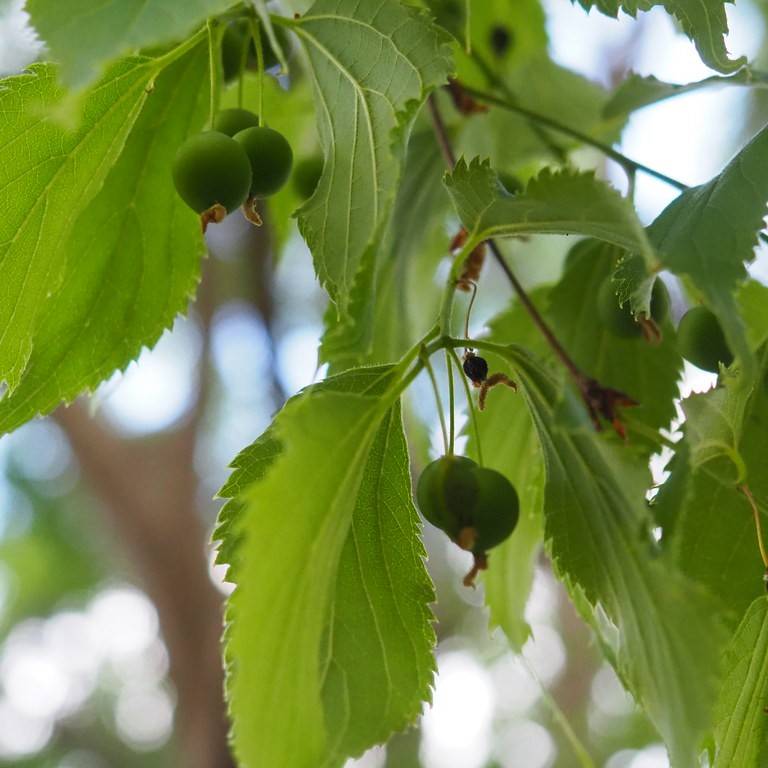
The Mediterranean Hackberry is an amazing evergreen tree that can be found in warmer climates. It grows quickly and can reach heights of up to 25 meters, with a wide canopy forming an attractive shade. The leaves are ovate shaped with a leathery texture and are deep green in the summer and a dull yellow in the winter. The flowers are small, greenish-white, in clusters, followed by small orange-red fruit. This fruit is amazingly edible, and can be enjoyed in jams, jellies, and wines. Additionally, the hard wood of the tree is also highly valued as it can be used in furniture making and flooring. It is also an amazing source of nectar for honeybees.
Care Guide
Watering
Mediterranean hackberry (Celtis australis) prefers soil that is evenly moist but not soggy. As such, it should be watered every 3 to 4 days, during the active growth period. Water thoroughly so that it reaches the entire root system. During periods of drought, watering more frequently may be necessary. Do not over-water, though, as this can lead to problems with root rot. In cold winter weather, the plant will require less water. The soil should be kept slightly moist but should not be waterlogged. Reduce watering gradually over the winter to plant dormancy.
Light
Mediterranean hackberry plants (Celtis australis) need plenty of sunlight to thrive and perform best when grown in full sun. For optimal growth, it needs approximately 6 hours of direct sunlight per day. The best time of day for this species to receive sunlight is between the hours of 7am and 11am. This ensures that the plant will receive the full spectrum of ultraviolet, visible, and infrared rays that a plant needs to effectively photosynthesize. In areas with intense summer heat, it is best to provide some afternoon shade. During the cool winter months, the plant will appreciate some indirect sunshine.
Temperature
Hardiness zone 6-9.
Pruning
For Mediterranean hackberry, pruning should only be done when necessary. During the growing season, any dead, diseased, or damaged branches should be pruned, which is known as corrective pruning. To control the overall growth of the plant and to shape it, pruning should be done during the dormant season (Late winter/early spring). Pruning should be light and judicious - only remove 1/3 of the total branches, taking care not to over-prune. This will ensure that the plant maintains its health and vigor.
Propagation
Air Layering Propagation, Grafting Propagation, Cutting, Seed Propagation
Uses & Symbolism
Attracts: Birds, Butterflies.
Related plants
Other plants you might like if you grow Mediterranean hackberry.