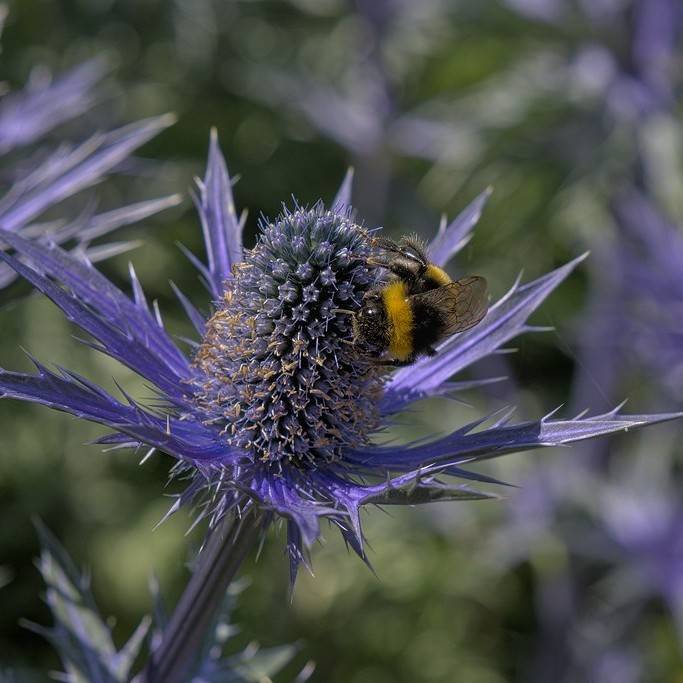
Mediterranean sea holly
Eryngium bourgatii
Overview
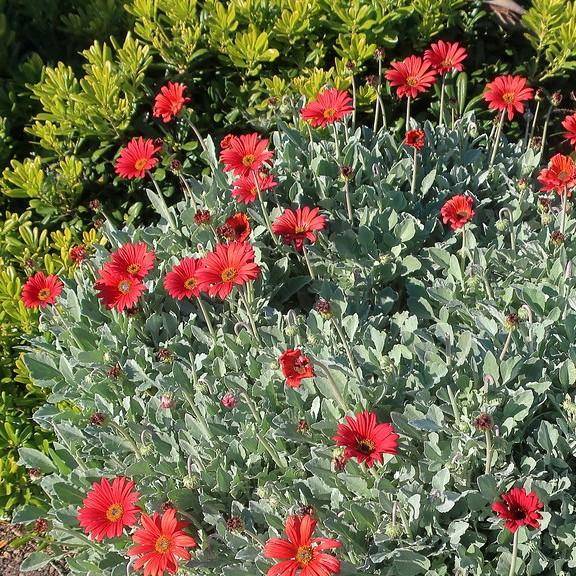
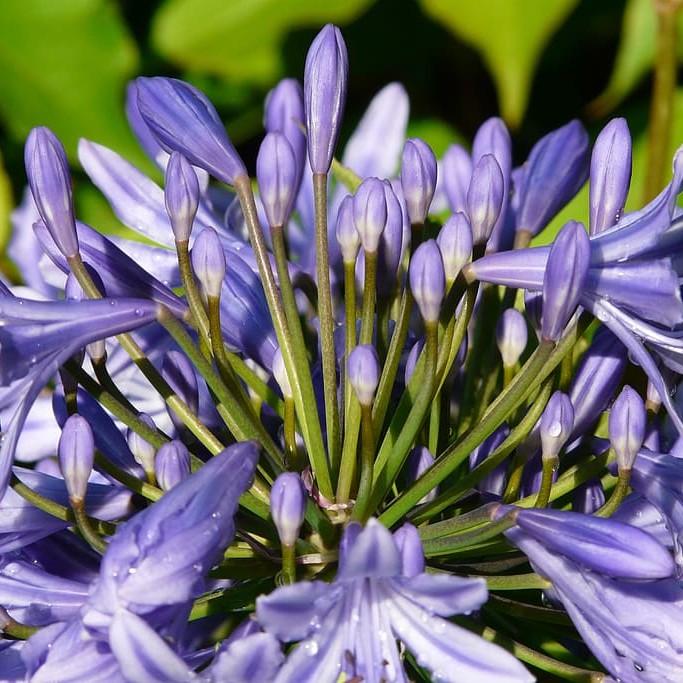
Mediterranean Sea Holly (Eryngium Bourgatii) is an amazing species of flowering plant. It is native to the rocky coastlines of the Mediterranean, bringing a dash of wild beauty to otherwise desolate surroundings. Its unique steel-blue leaves and stunning globe-like flowers make it an eye-catching sight. Growing up to 90 cm in height, it is a hardy plant, adapted to survive in full sunlight and salt-laden coastal winds. Its flowers are a magnet for bees, butterflies and hoverflies, creating a vibrant display of wildlife activity around them. It’s also a good source of nectar for pollinators, making it a valuable addition to any garden.
Care Guide
Watering
Mediterranean sea holly should be watered moderately in order to prevent soggy soil and root rot. Water sufficiently, about once a week, to keep the soil moist but not wet. Ensure that the soil is draining properly, as water logged soil can be damaging to the roots of the plant. Increase watering during dry periods, such as summer, and reduce watering in the winter. Do not allow the soil to remain saturated, as this can inhibit root and stem growth. Monitor soil moisture levels and adjust accordingly.
Light
Mediterranean sea holly (Eryngium bourgatii) prefers full sun to partial shade, with exposure to as much direct sunlight as possible for at least 6 hours per day. Early morning sun is particularly beneficial for this plant species, as it helps to ensure that temperatures do not become too extreme. While the plant can tolerate some shade, it can have a tendency to become leggy in partial shade, so full sun is preferred. It is important to protect the plant from direct midday sun, when temperatures are at their highest and can lead to sun scalding.
Temperature
Hardiness zone 5-8.
Pruning
Mediterranean sea holly (Eryngium bourgatii) should be pruned in early spring, before new growth begins to emerge. Pruning back any dead or damaged parts of the plant is a good idea to help reduce or eliminate disease and pest problems. Generally, it is recommended to prune the entire plant back by about 2-thirds of its original size, removing any straggly stems or shoots that are not necessary. This will stimulate the plant to produce more vigorous and attractive foliage. If the plant is in a location where it might get too much sun or wind exposure, judicious pruning can be an effective way to reduce this. It is important to avoid over-pruning as this could potentially weaken the plant and reduce its resilience to other environmental stresses.
Propagation
Division, Cutting, Seed Propagation, Layering Propagation
Related plants
Other plants you might like if you grow Mediterranean sea holly.