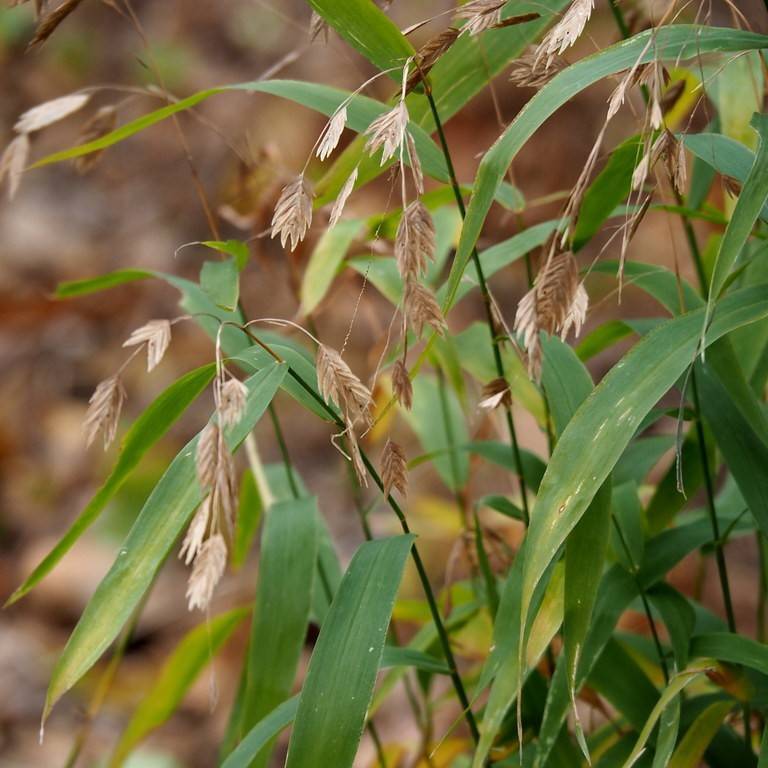
northern sea oats
Chasmanthium latifolium
Overview
Northern sea oats (Chasmanthium latifolium) is an amazing plant species that is native to North America. It has beautiful, drooping seed heads made up of inconspicuous, flat fruits. It is extremely versatile and can be found in a variety of soils, including both wet and dry areas. Its growing season is very long too, so it is also easy to maintain. It is also drought tolerant and does not require much fertilizer to thrive. It is also an extraordinary plant, as it produces a plethora of seeds that birds relish. It is a great addition to any garden or backyard and adds a unique touch to the landscape. Its beauty and benefits make it a must-have for any garden.
Care Guide
Watering
Northern sea oats should be watered consistently and deeply to allow the roots of the plant to soak up plenty of moisture. For optimal health, water northern sea oats about once a week or when the soil begins to dry out. In especially hot and dry weather, they may need to be watered more frequently. When watering, give the plant a good soaking until water runs freely through the bottom of the pot or container. Avoid splashing the foliage as much as possible, as this can cause fungus.
Light
Northern sea oats (Chasmanthium latifolium) is a native grass species that prefers partial to full sun exposure. This plant species needs a minimum of 4 hours of direct sunlight each day in order for it to thrive. Sunlight should also be filtered through a light, open canopy as too much direct sunlight can cause the leaves to burn. The ideal time for northern sea oats to take in sunlight is during the cooler parts of the day, usually morning or early evening. Also, if the plant is getting direct exposure to the midday sun, make sure to provide some kind of shade to it, such as planting it in an area sheltered from the sun or providing a mesh cover.
Soil
Humus rich, Well-drained
Temperature
Hardiness zone 3-8.
Pruning
Northern sea oats should be pruned once a year in late summer or early fall. Pruning should consist of cutting back the foliage to about 6 inches from the base. This will encourage a bushier growth and help maintain its attractive shape. To further control the size and shape of the plant, it can also be lightly trimmed back after the blooms have faded. It is important to not over-prune this species, as it is sensitive to damage and can lose too much of its foliage if not properly cared for.
Propagation
Seed Propagation
Diseases & Pests
Common pests: Pest resistant, Disease resistant, Deer resistant, Drought resistant.
Related plants
Other plants you might like if you grow northern sea oats.