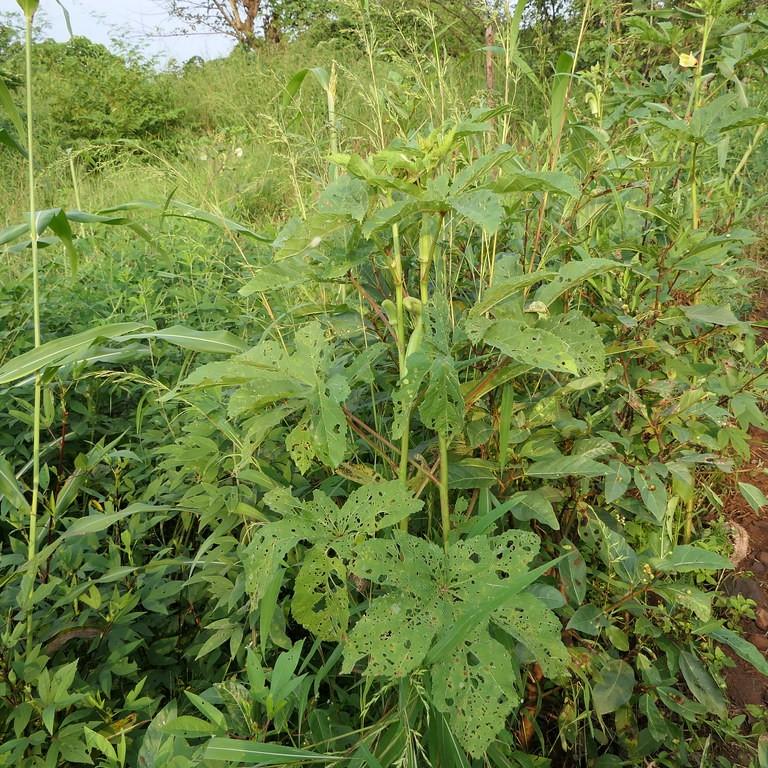
okra
Abelmoschus esculentus
Overview
Okra (Abelmoschus esculentus) is an amazing plant - its pods are an incredible source of nutrients and they have a unique, delicious flavor that is unlike any other vegetable. Okra is easy to grow and its delicate flowers are an eye-catching sight in the garden. It is also full of antioxidants and vitamin C, making it a great choice for those wanting to improve their health and wellbeing. Moreover, it has a high content of dietary fiber, which helps to keep your digestive system in check. Okra is truly amazing - a versatile and nutritious vegetable that tastes great, too!
Care Guide
Watering
Okra should be watered frequently, as soon as the topsoil becomes dry to the touch. Small okra plants should receive a light watering every 2 to 3 days, while mature plants should be watered daily or every other day during hot, dry periods. During cooler weather, okra will require less water; however, it is important to not neglect the plant, as it is still growing and producing fruit. Be sure to never over-water your okra plants; okra thrives in dry soil and too much water can stunt its growth or cause it to rot.
Light
Okra prefers full sunlight for optimal growth and production of fruit. The plants should receive at least 6-8 hours of direct sun per day, with midday summer sun being best. If grown in partial shade, okra will produce an abundance of foliage but few fruit pods. Allowing okra to grow in an area with too much shade will often lead to spindly, sparse plants that are susceptible to disease and pests.
Temperature
Hardiness zone 2-11.
Pruning
Pruning okra (Abelmoschus esculentus) should take place after the okra has flowered. You should remove the flower stalks when they die off, to help promote bushier growth. During the season, lightly prune the okra plant by pinching off the growing tips of the branches. This will help ensure more lateral branching. The okra plants can be pruned about once a month until the end of August, at which time they should be pruned back to about 12 inches. Overall, you should plan to remove about 1/3 of the older, mature stems each year to prevent disease build-up and promote new growth.
Propagation
Seed Propagation, Cutting, Layering Propagation, Division, Grafting Propagation
Related plants
Other plants you might like if you grow okra.