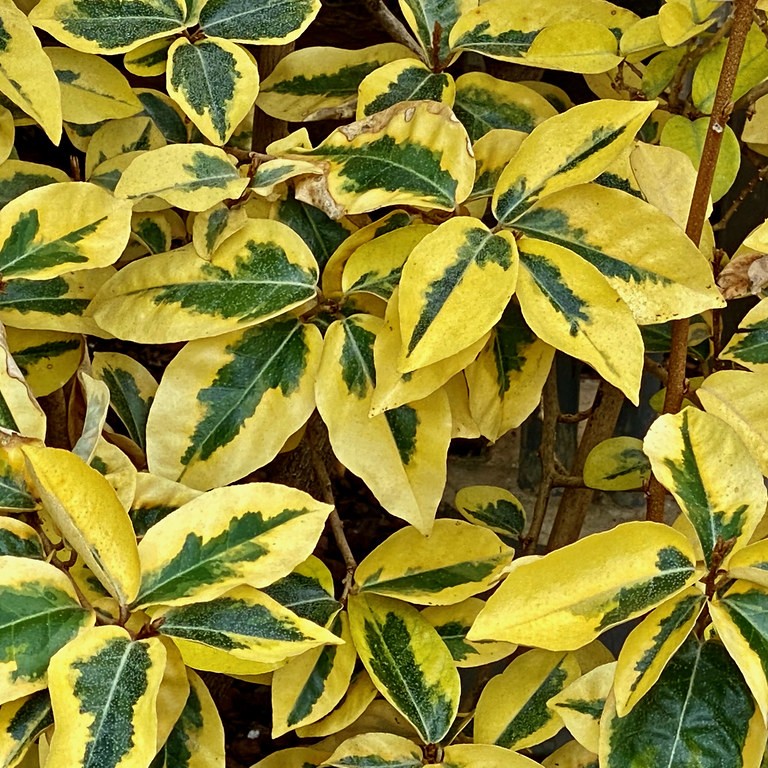
oleaster
Elaeagnus ebbingei
Overview
The oleaster (Elaeagnus ebbingei) is an amazing plant species that adapts to a variety of environments. Its narrow, gray-green leaves, silver underside, and distinct silvery hues give it an eye-catching appearance. Its clusters of fragrant white flowers are an added bonus in the garden. It is highly drought tolerant and grows in both full sun and partial shade. Its ability to thrive in poor soil also makes it an excellent choice for an easy care garden. The oleaster offers beautiful blooms and attractive silver foliage, making it a perfect addition to any garden. Plus, its fruits are edible and can be used as a garnish or included in recipes. With its attractive flowering and fruit-bearing capabilities, the oleaster is an excellent choice for year-round interest in the garden.
Care Guide
Watering
Oleaster (Elaeagnus ebbingei) should be watered whenever the top 1-2 inches of soil feel dry to the touch. It's typically best to water the plant well and thoroughly, then wait until the soil starts to dry out before watering again. A typical watering schedule should be every 5-7 days in the summer and every 10-14 days in the winter. Make sure to water the root zone area thoroughly to ensure moisture absorbs deep into the soil.
Light
The oleaster plant species requires full sun to partial shade to thrive and produce their edible fruits. In the warmest months of the year (typically May-August) the oleaster should be in full sun 8-10 hours per day. During the spring and fall seasons, 4-6 hours of sun per day should suffice. In very hot climates, some light shade may be needed, especially during mid-afternoon when temperatures are typically the highest. The oleaster is relatively drought tolerant so if rainfall is not common, then it should be watered deeply once a week to keep the soil moist and the plant vibrant.
Temperature
Hardiness zone 7-9.
Pruning
Oleaster should be pruned in late winter or early spring each year. Light pruning is best, removing only small twigs and branches or shaping large branches. Never remove more than 30% of the plant at once. Even with light pruning, be careful to not to disrupt the plant's natural form or create uneven branches. If the plant is highly overgrown, it can be pruned more aggressively. However, if aggressive pruning is necessary it should be performed gradually over several years.
Propagation
Cutting, Layering Propagation, Grafting Propagation, Seed Propagation, Division
Related plants
Other plants you might like if you grow oleaster.