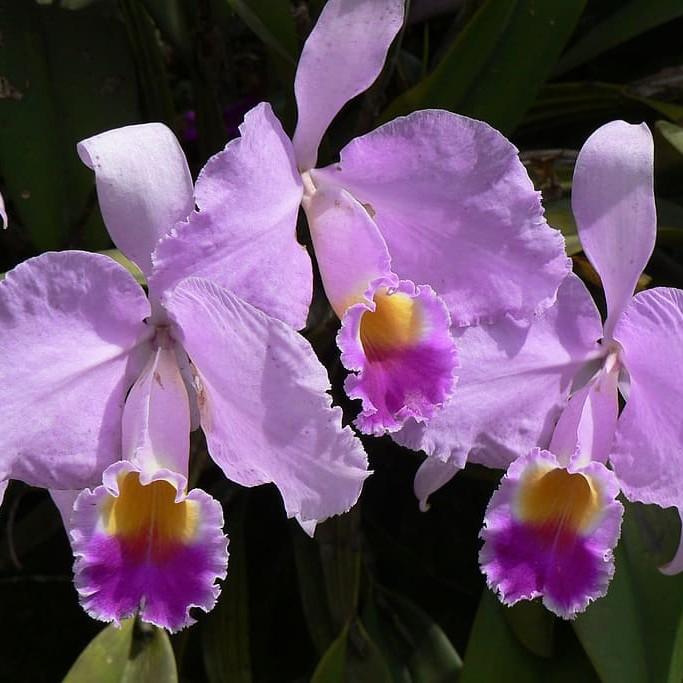
orchid
Cattleya (group)
Overview
The orchid (Cattleya group) is an amazing plant species. Its striking and eye-catching appearance sets this flower apart from the rest. Its large and colorful blooms, ranging in a variety of stunning purple, pink, white, and yellow hues, are truly remarkable. Its distinctive petals and intricate patterns make it extremely unique. Its versatile nature allows it to thrive in various conditions and environments. Even during winter, the orchid continues to provide an exotic display of beauty with each flower. As a result, the orchid has become an iconic symbol of long-lasting beauty and grace.
Care Guide
Watering
Orchid plants, such as Cattleya (group) should be watered approximately every 7-10 days. They should be watered until it begins to slightly run out of the bottom of the pot. During the summer months, the frequency of watering should be increased slightly for optimal growth. It is important not to overwater the plant because it can cause root rot and other problems. During the winter months, the amount of watering should be decreased slightly, while still keeping the soil lightly moist.
Light
Orchids of the Cattleya (group) species thrive with either filtered sunlight, or about 4 to 5 hours of light each day in direct sunlight. It is best to give the Cattleya group orchids bright indirect light, such as from a nearby brightly lit window. If direct sunlight is unavoidable, then the directly sunlight should be limited to only a few hours, preferably in the early morning or late afternoon when the sun’s rays are not as strong. Avoiding midday sun is essential to keeping the orchid healthy.
Temperature
Hardiness zone 10-12.
Pruning
When pruning an orchid of the Cattleya (group), you should always take off the old, dead or dying flowers and any dead or dying foliage. You can also remove any suckers that have grown from the base of the plant. It is best to prune these plants in late winter or early spring, as that is when they will be preparing for new growth and their flowering season. You only need to prune enough to remove the dead growth and any suckers, as pruning too much can reduce the flowering potential of the plant.
Propagation
Division, Air Layering Propagation, Tissue Culture, Seed Propagation
Related plants
Other plants you might like if you grow orchid.