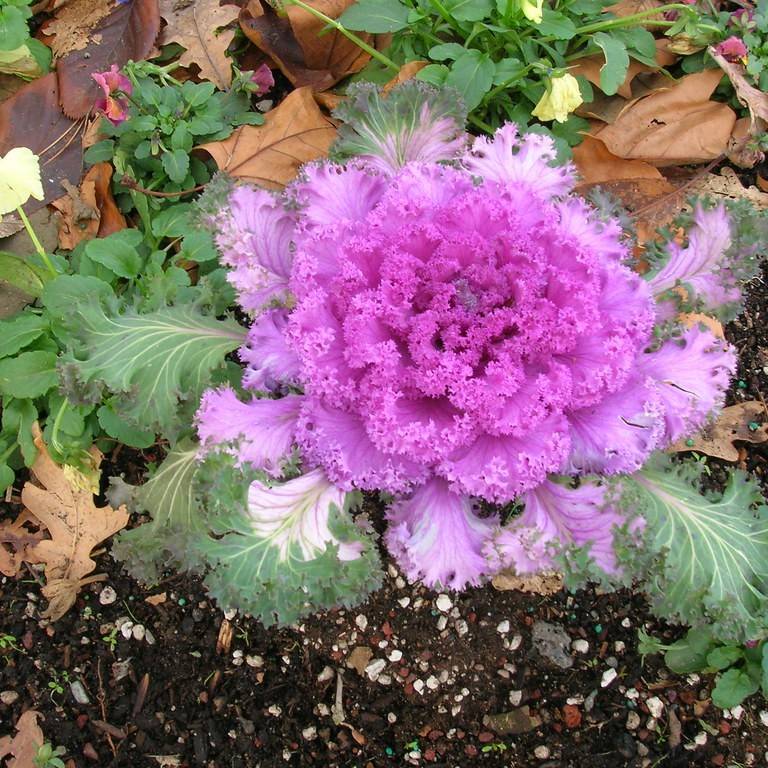
ornamental cabbage
Brassica oleracea (Ornamental Cabbage and Kale Group)
Overview
Ornamental cabbage (Brassica oleracea) is an amazing plant for gardens and landscapes thanks to its unique colouring and easy-care nature. This hardy vegetable grows in a rosette pattern and throws off beautiful white and purple hues that become even brighter with the cold. With its small size, it is ideal for planting in containers. It's relatively disease-free, loves the sun, and can thrive in almost any type of soil. Furthermore, it can be used as a great supporting plant to provide colour and texture to an already established flowerbed. This reliable beauty will make any garden look perfect.
Care Guide
Watering
When it comes to watering ornamental cabbage, it is important to find a balance between too much and too little. Too much water will cause your cabbage to become crowded, and too little water will cause it to wilt. The soil must remain moist, but not soggy. In general, ornamental cabbage should be watered once or twice a week. Sandy soils will need more frequent watering than clay soils. To test soil moisture, stick your finger into the soil an inch or 2, the soil should feel moist but not wet. If the soil is damp or soggy, wait a day or 2 before watering. If the soil is dry to the touch, water thoroughly (until water runs out of the drainage holes at the bottom of the pot), then allow the soil to dry out before watering again. If you have planted ornamental cabbage outdoors, it's important to provide 1 -2 inches of water per week, either through rainfall or irrigation. It is also important to regularly inspect your plants and look for signs of over or underwatering. Yellowing or wilting leaves may indicate that your cabbage is not getting enough water; while soft or slimy leaves may suggest overwatering.
Light
Ornamental cabbage generally requires full sun or partial sun for up to 6-8 hours each day in order to thrive. It is best grown in cooler climates, and prefers temperatures between 40 and 50 degrees Fahrenheit during the day and between 28 and 36 degrees Fahrenheit at night. The plant should be placed in a spot that receives at least 6 hours of sunlight throughout the day, preferably during the late morning and afternoon.
Temperature
Hardiness zone 2-11.
Pruning
Ornamental Cabbage should be pruned in early spring and again when the plant has finished flowering. It should be lightly pruned by removing any dead or diseased leaves and flower heads. To encourage new growth, cut back the outermost stems to the crown or base of the plant. Pruning also helps control the overall size and shape of the ornamental cabbage. Also, after flowering, remove spent flowers or seedheads. Finally, keep the area around the plant weeded and free of debris.
Propagation
Seed Propagation, Cutting, Division, Layering Propagation
Related plants
Other plants you might like if you grow ornamental cabbage.