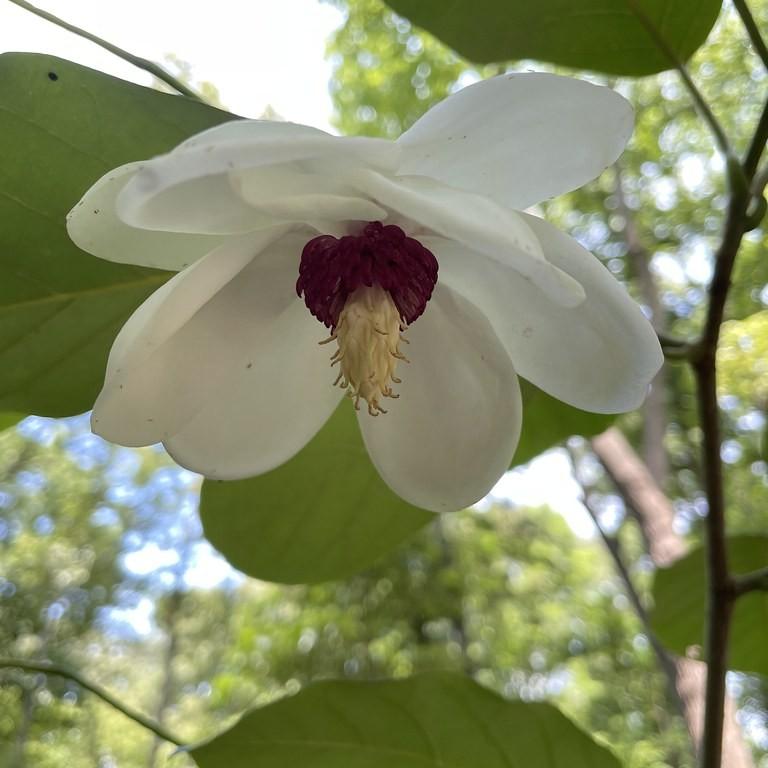
Oyama Magnolia
Magnolia sieboldii
Overview
The Oyama Magnolia (Magnolia sieboldii) is an amazing species of tree that is native to East Asia. It is an ornamental tree, with stunning big white and pink cup-shaped flowers that bloom among its beautiful, dark-green leaves in early spring. It is a fast-growing species that is adaptable to a wide range of climates and soils, making it a good choice for home gardeners. An added bonus is that the Oyama Magnolia produces delicious edible fruit, popular in many Asian countries. Pruned into hedges or left to its natural shape, this tree will become a stunning addition to any garden.
Care Guide
Watering
Oyama Magnolia should be watered deeply about once or twice a week during the spring and summer seasons when the tree is actively growing. Water around the root system, adding enough water to moisten the soil 8 to 10 inches deep. Reduce the amount of watering in fall and winter as the plant goes dormant. Ensure the soil always remains slightly moist during these seasons.
Light
Oyama magnolia grows best in areas that receive full sun, though it can tolerate partial shade. It needs at least 6-8 hours of direct sunlight per day in order to flourish. In the spring and summer, the tree should receive direct sunlight for much of the day, while in the autumn and winter, it can benefit from less direct sun and more indirect light.
Soil
Humus rich, Well-drained
Temperature
Hardiness zone 6-6.
Pruning
Oyama Magnolia (Magnolia sieboldii) should be pruned during the late winter or early spring when the plant is still dormant. Light pruning is recommended to shape the plant and maintain an attractive form. The best time for more thorough pruning is after the Oyama Magnolia has finished flowering. Be sure to only prune dead, diseased, or damaged branches, and avoid pruning healthy branches. Remove no more than 1/4 of the branches to avoid damaging the plant.
Propagation
Seed Propagation, Layering Propagation, Cutting, Cutting
Diseases & Pests
Common pests: Pest resistant, Disease resistant.
Related plants
Other plants you might like if you grow Oyama Magnolia.







