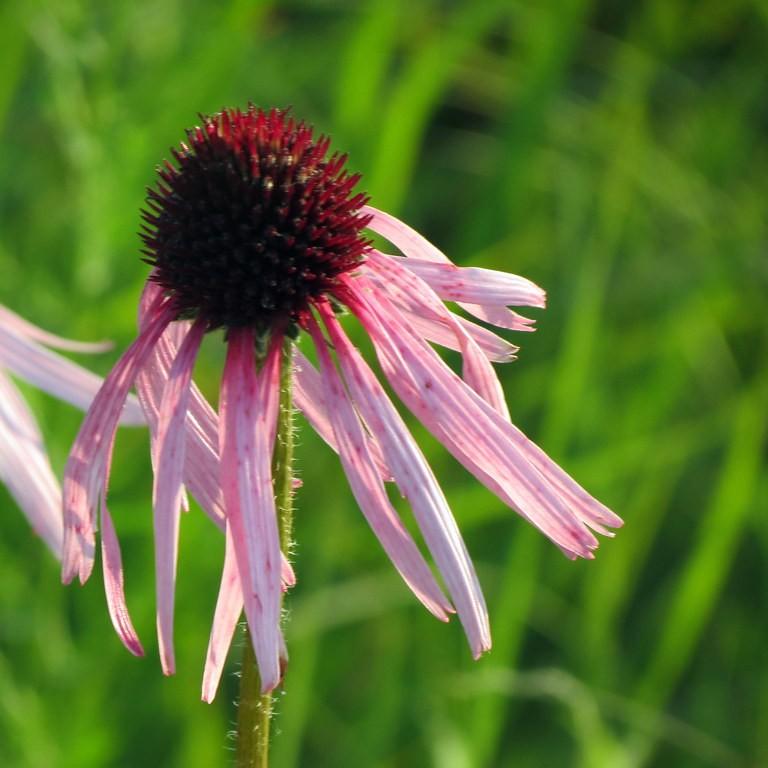
pale purple coneflower
Echinacea pallida
Overview
The pale purple coneflower (Echinacea pallida) is an amazing species for both its beauty and its medicinal benefits. This long-blooming perennial has fragrant soft pink petals and striking drooping cone-shaped centers. It's also highly attractive to butterflies and bees and is drought-tolerant once well-established. Not only is it one of the longest-blooming wildflowers in the prairie, it's also incredibly useful. Its roots have been used to alleviate colds, sore throats, and other maladies for centuries. Plus, it's easy to maintain as long as it gets enough sun and moderate water.
Care Guide
Watering
Pale purple coneflower prefers humid conditions and requires ample water to thrive. Water deeply once or twice a week in summer, depending on the climate and soil type. Make sure to water until the top inch of soil is moist. During periods of extreme heat, water more often, however, avoid overwatering as this can lead to root rot and other fungal diseases. In winter, water infrequently as the plant is dormant - usually every 2 to 4 weeks in mild climates, though no water may be necessary during cold winter weather.
Light
Pale purple coneflowers need at least 5 to 6 hours of direct sunlight each day to bloom and thrive. Though individual plants may differ, most prefer full sun conditions. If grown in lower light conditions, blooms may be fewer and the plant may have a spindly growth habit. Pale purple coneflowers do best when planted in an area that receives direct sunlight during the morning and part of the early afternoon, with some afternoon shade if necessary. To ensure optimal growth and blooms, position your plants in an east-facing spot that will provide the necessary 5 to 6 hours of daily sunlight.
Temperature
Hardiness zone 3-10.
Pruning
When it comes to pruning pale purple coneflowers (Echinacea pallida), it's best to start in late winter or early spring, when the plants are still dormant. Start pruning by cutting back dead stems and foliage to promote new growth. If the plants are overgrown, prune them back by about a quarter of their overall length. Once new growth starts to appear, you can selectively remove any additional stems and foliage that looks weak or damaged. Avoid over pruning, as this can weaken the plant and cause it to become more susceptible to disease.
Propagation
Seed Propagation, Division, Root Cutting, Layering Propagation
Uses & Symbolism
Attracts: Butterflies.
Related plants
Other plants you might like if you grow pale purple coneflower.







