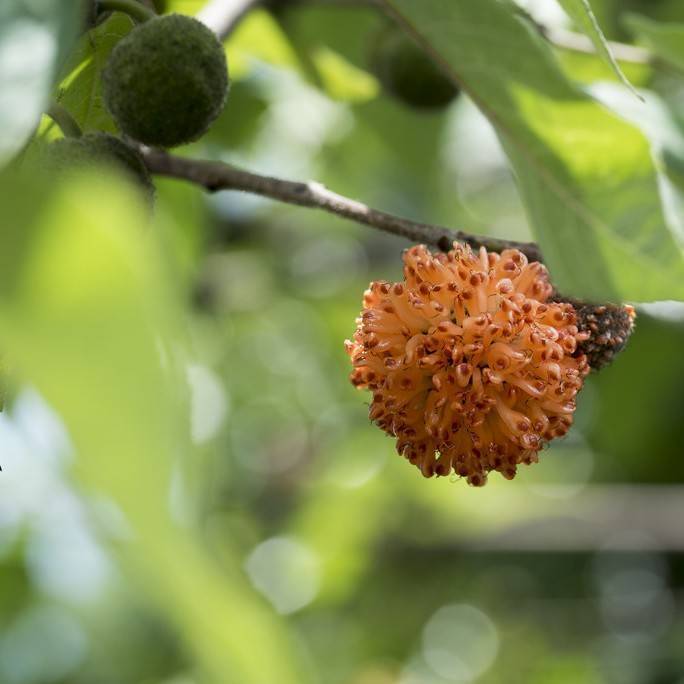
paper mulberry
Broussonetia papyrifera
Overview
Paper Mulberry (Broussonetia papyrifera) is an amazing plant species native to Southeast Asia and the Indian sub-continent. It has a fast-growing, wide-spreading, and graceful habit and produces lovely white flowers in summer. Its paper-like bark is its most striking feature. This thin, papery bark can be easily peeled off the trunk and used to make paper and even clothes. The plant also produces edible berries and provides shelter and food for wildlife. Paper Mulberry is an incredibly versatile and fascinating species that is well worth growing in modern gardens.
Care Guide
Watering
Paper Mulberry plants should be watered heavily once a week in the summer months and every other week in the winter months. The amount of water can vary depending on the type of soil and the size of your plant, but a general guideline is 1 to 2 inches ( 2.5-5 cm) of water per week. Make sure that the soil is saturated but not waterlogged. Additionally, having a drainage system in place is ideal to ensure the roots are not standing in water.
Light
The paper mulberry (Broussonetia papyrifera) requires a minimum of 4 to 6 hours of direct sunlight each day in order to thrive. It is best to give the plant an equal amount of direct sun throughout the day. In regions with longer winters, the plant should receive more sunlight to keep it healthy and vigorous.
Temperature
Hardiness zone 6-9.
Pruning
Paper mulberry plants need to be pruned annually in late winter to early spring once the plants begin to grow again. Prune the branches back to the desired size and shape, being sure to cut at least 1-third of the branches to promote healthy new growth. Remove any dead, broken, or diseased branches to prevent further damage to the plant. If you’d like to encourage more lush foliage, thin overcrowded branches and prune branches back to the desired height. This will not only give it a better shape, but also promote bushier growth at the top.
Propagation
Air Layering Propagation, Grafting Propagation, Cutting, Seed Propagation
Uses & Symbolism
Attracts: Birds.
Related plants
Other plants you might like if you grow paper mulberry.