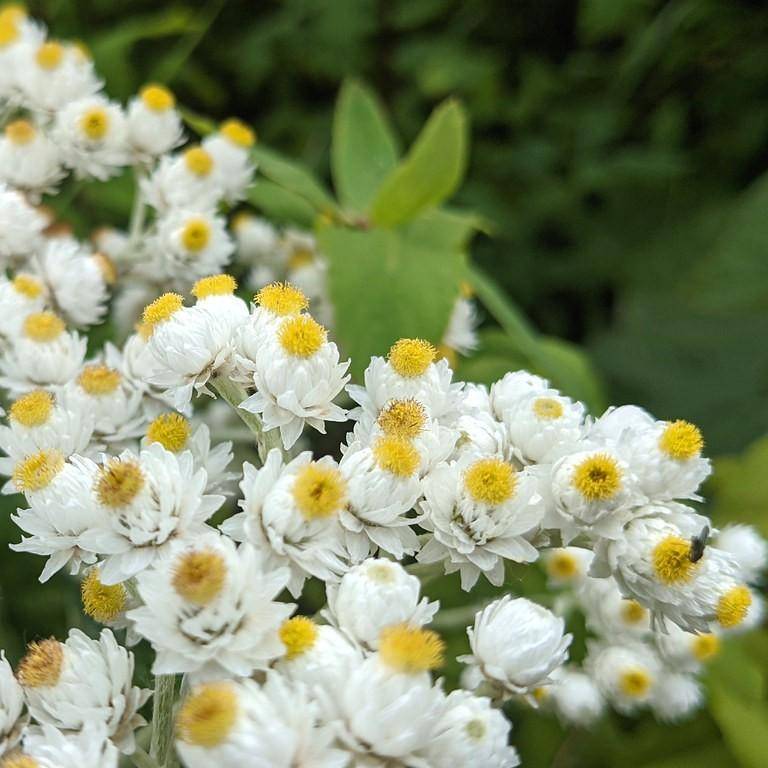
pearly everlasting
Anaphalis margaritacea
Overview
Pearly Everlasting (Anaphalis margaritacea) is an amazing plant species due to its ability to survive in extreme conditions. It thrives in both dry, rocky soils and humid climates. Its brilliant white flowers are an eye-catching addition to any garden, while its unique papery foliage provides a stunning contrast. Its hardiness and drought-tolerance also make it great for drought-prone areas and xeriscaping. Its blooms range in color from a delicate white to a rich deep yellow, and the plant can continually bloom and produce new flowers throughout the summer and fall months. Pearly Everlasting is a beautiful and resilient addition to any garden.
Care Guide
Watering
Generally, pearly everlasting requires consistently moist soil, but it can tolerate occasional dry spells. Water pearly everlasting when the top inch of soil is dry. Water the soil thoroughly, making sure to drench the root zone, and let the soil dry out before watering again. During the summer months, water pearly everlasting 2 to 3 times a week depending on how hot and dry it is. In the cooler months, it is best to reduce the frequency of watering. In regions with high rainfall, pearly everlasting may not require additional watering.
Light
Pearly everlasting (Anaphalis margaritacea) does best in full sun. It prefers long days and 6 to 8 hours of direct sunlight per day. However, it should be protected from the hot afternoon sun in warmer climates, to prevent it from wilting or burning. Additionally, this plant does well in the dappled sunlight found under trees or large shrubs. If growing in a shady spot, look for an area that still receives some direct sun for a few hours during the day.
Soil
Sandy Loamy Clay
Temperature
Hardiness zone 3-8.
Pruning
Pearly everlasting (Anaphalis margaritacea) does not require regular pruning. Pruning is only necessary if the plant becomes unsightly, or exceeds the desired height. Prune in late winter or early spring, when the plant is completely dormant. To prune, cut the plant back to 6-8 inches from the ground, aiming for an even height and shape. Be sure to use sharp pruning shears to avoid damaging the branches. After pruning, remove dead or diseased branches and apply mulch around the base of the plant.
Propagation
Seed Propagation, Division, Cutting, Layering Propagation
Uses & Symbolism
Attracts: Butterflies.
Diseases & Pests
Common pests: Caterpillar, cutworm, Pest resistant, Disease resistant, Deer resistant, Rabbit resistant, Drought resistant .
Related plants
Other plants you might like if you grow pearly everlasting.