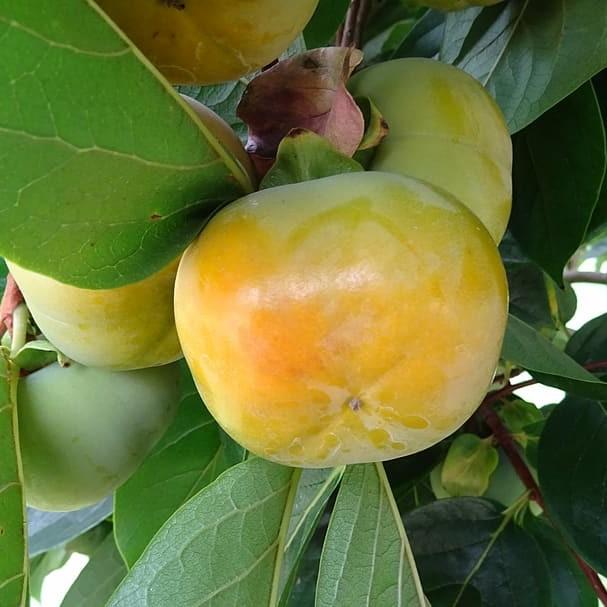
persimmon
Diospyros virginiana 'Meader'
Overview
The Persimmon (Diospyros virginiana 'Meader') is an amazing plant species for any garden. Growing up to thirty-five feet in height, it features unique claret-colored five-lobed leaves and produces fragrant star-shaped white blooms in late spring that give way to an abundance of orange-colored fruits in the fall. Plus, this ornamental tree can grow in less than ideal soil conditions, surviving through hot summers and cold winters, making it the ideal backyard plant. Its tasty fruits can be harvested for making jams and jellies, and the leaves contain a natural dye that can be used for handicrafts and other arts and craft activities. Persimmon is truly a wonderful addition to any landscape.
Care Guide
Watering
Persimmon (Diospyros virginiana 'Meader') should be watered regularly in order to keep the soil evenly moist, but not soggy. During the spring and summer months, it is important to water deeply once or twice a week in order to encourage strong root growth and promote healthy fruits. During the fall and winter, water less often; about once a month should be enough. Make sure that the soil drains well, as too much water can be detrimental to the plant. Signs of over-watering include wilted leaves and brown leaf tips. If the soil feels overly dry, it may be time to water.
Light
Persimmon (Diospyros virginiana 'Meader') should be planted in an area with full sun exposure (6-8 hours of direct sunlight each day), since this species thrives in direct sunlight. The hot, humid climate of southeastern United States is ideal for this species, but it may not do so well in cooler climates. Therefore, it is important to plant your persimmon trees where they will receive full sun exposure, preferably in the morning and early afternoon hours before the hottest part of the day. In addition, persimmon trees do not require a large amount of water, so water should only be given during prolonged dry periods.
Temperature
Hardiness zone 4-9.
Pruning
The Persimmon (Diospyros virginiana 'Meader') can be pruned annually from late-winter to early spring. Pruning should be done before the plant blooms or produces new growth. During pruning, it is important to remove any dead, diseased, crossing, or weak branches in order to open up the canopy and promote healthy growth. Any shoots arising from the base of the tree can be removed if desired. Most branches can be thinned out in order to increase sunlight, air circulation, and reduce the tree's size. It is also important to shorten suckers or water sprouts that appear from the base of the tree and remove any branches growing inward or rubbing against 1 another. Lastly, you should never prune more than 25% of the tree during 1 season.
Propagation
Grafting Propagation, Layering Propagation, Cutting, Air Layering Propagation, Tissue Culture
Related plants
Other plants you might like if you grow persimmon.