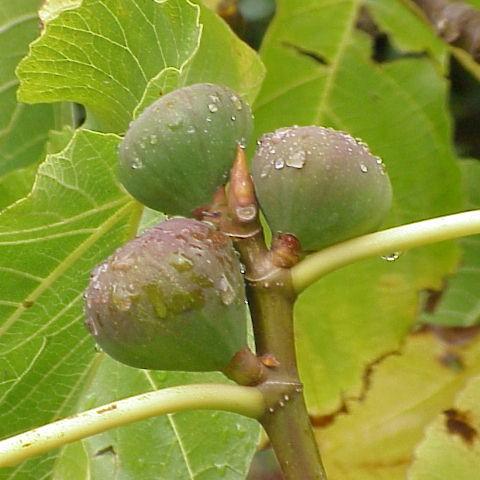
Peter's Honey Fig
Ficus carica 'Peter's Honey'
Overview
Peter's Honey Fig (Ficus carica 'Peter's Honey') is a delightful and delicious fig variety that is sure to impress any avid gardener. This sweet, fragrant and highly productive fig produces fruit with uniquely colored skin - a soft yellow with a green blush - and delicious, honey-sweet flesh. Robust and easy to grow, it is one of the few varieties of figs suitable for growing in northern climates and can even tolerate temperatures down to -20F/-29C. Even better, the attractive glossy green foliage makes it attractive even when it is not bearing fruit. With its delicate flavor, extraordinary hardiness and reliability, Peter's Honey Fig is a perfect choice for any home garden.
Care Guide
Watering
Peter's Honey Fig is a drought-tolerant plant species that does not need a lot of water. Generally, you should water it only once or twice per week, allowing the soil to dry out in between waterings. When watering the plant, it is best to thoroughly soak the soil, so that water reaches the roots. During the hotter months of the year, Peter's Honey Fig may need slightly more water than in other months.
Light
Peter's Honey Fig (Ficus carica 'Peter's Honey') needs 6 to 8 hours of direct sunlight during the warmer months of the year for proper growth and fruiting. During the cooler months, Peter's Honey Fig will thrive with 4 to 6 hours of direct sunlight. Sunlight should be taken into account when planting Peter's Honey Fig in an area for optimal growth, providing as much direct sunlight as possible.
Soil
Well-drained
Temperature
Hardiness zone 7-7.
Pruning
Pruning of Peter's Honey Figs should be done once a year in the late winter, or early spring prior to the start of new growth. For best results, prune the umbrella-shaped tree by removing 1/2 to 2/3 of the flowing shoots. This will help to encourage new, more fruitful growth. Additionally, any dead, damaged, or diseased limbs should be removed. Remove any suckers emerging from the base of the trunk and cut back water sprouts (excessive upright shoots) to the main branch. Depending on the size of the tree, loppers or a pruning saw may be needed for larger branches.
Propagation
Air Layering Propagation, Cutting, Grafting Propagation, Division, Seed Propagation
Diseases & Pests
Common pests: Pest resistant, Disease resistant.
Related plants
Other plants you might like if you grow Peter's Honey Fig.