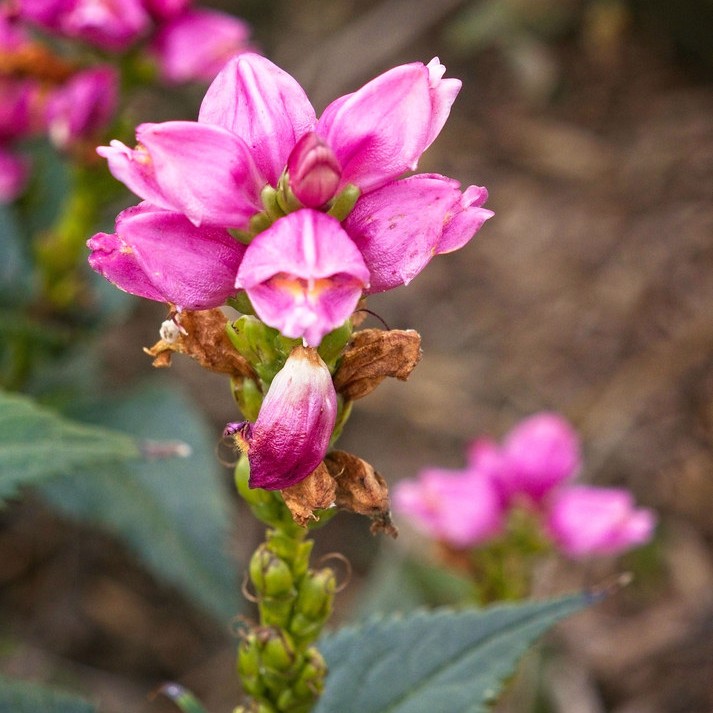
pink turtlehead
Chelone lyonii
Overview
The beautiful pink turtlehead (Chelone lyonii) is a hardy plant species, sure to delight gardeners who want gorgeous color in their garden. It produces clusters of bright pink, turtle-head shaped flowers on upright stems, which can reach a height of up to three feet tall. Not only does this perennial bloom throughout the summer, but its foliage has a beautiful silver sheen. It's also very drought-tolerant, meaning it requires very little water to thrive. Pink turtlehead adds excellent contrast to bright-colored perennial flowers and is sure to be the star of any garden setting.
Care Guide
Watering
The pink turtlehead (Chelone lyonii) prefers moist soil and needs to be watered regularly. The best way to water this plant is to keep the soil of the plant evenly moist and not soggy. In general, the pink turtlehead should be watered when the top layer of soil feels dry to the touch. It should be watered deeply, at least 1-2 inches, and only watered again when the top layer of soil is dry. During the growing season (Spring-Autumn), you should water the plant about once a week. Additionally, it is important to water the plant more frequently during hot and dry periods. In winter, pink turtlehead should be watered much less often but must not be allowed to dry out completely.
Light
Pink turtlehead (Chelone lyonii) is a plant species native to North America. It prefers full sun and can tolerate partial shade. However, to achieve its best growth and bloom, it needs full sun with at least 6-8 hours of direct sunlight each day. In regions with very hot summers, it is best to provide some afternoon shade to help keep the soil moist and limit stress on the plant. When grown in partial shade, pink turtlehead will usually produce lighter foliage and fewer flowers.
Temperature
Hardiness zone 3-8.
Pruning
Pink Turtlehead (Chelone lyonii) plants should be pruned in late winter or early spring, just before they begin to develop new growth. Crossing or weak stems can be removed, and the plant should be trimmed to shape the form and reduce its height if desired. Dead or damaged flowers can be removed, but be careful not to cut away live stems with fresh buds. Plant height and width can be reduced by up to 30%, which will help to control the size of the plant and will encourage branching. When pruning, make sure to keep the shape of the plant balanced and symmetrical.
Propagation
Division, Seed Propagation, Cutting
Uses & Symbolism
Attracts: Butterflies.
Related plants
Other plants you might like if you grow pink turtlehead.







