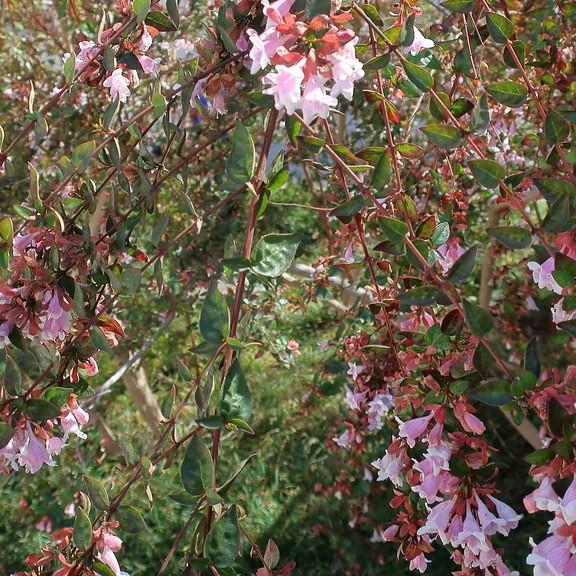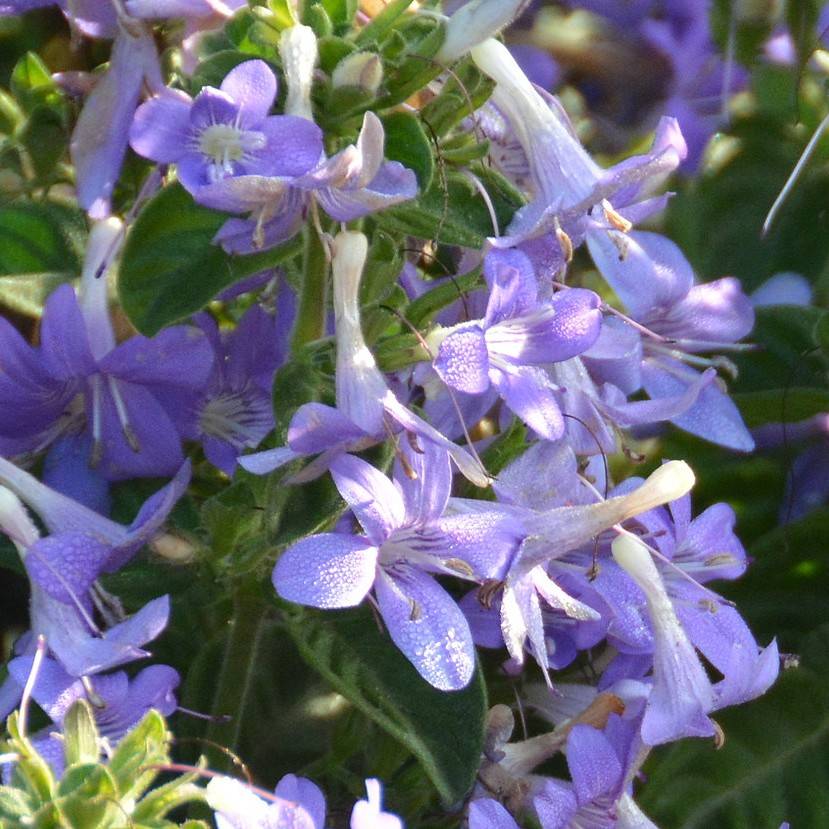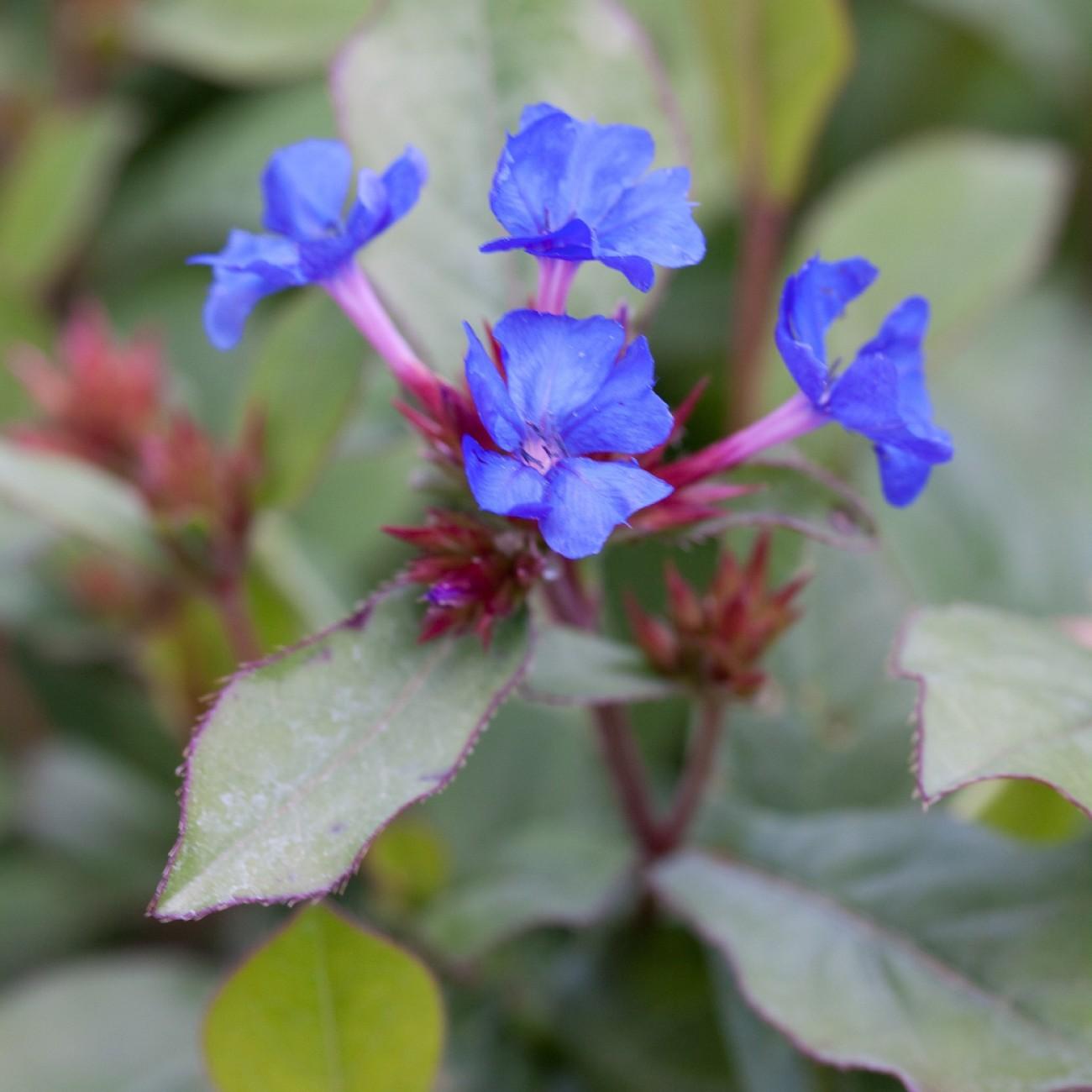
plumbago
Ceratostigma plumbaginoides
Overview
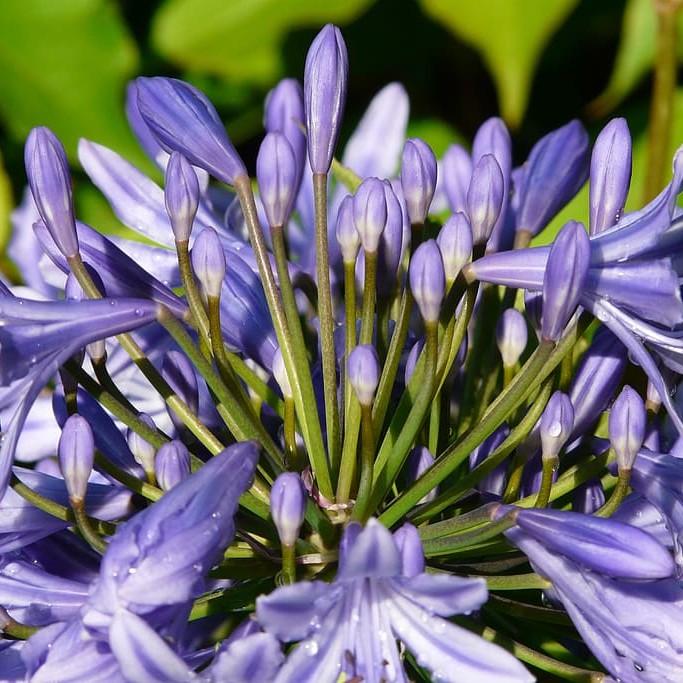
Plumbago (Ceratostigma plumbaginoides) is a true showstopper in the garden or landscape. Brilliant blue flowers blanket the plant from summer all the way through autumn. Not only is the flower display beautiful – the foliage of the Plumbago is also amazing. Long, deep green leaves make a compact mound, and through autumn they turn hues of yellow and russet. If you’re looking for a low maintenance, hardy plant with year-round interest, then Plumbago is perfect for you. It thrives in sunny, well-drained and dry conditions, and does well in even the harshest of soils.
Care Guide
Watering
Plumbago should be watered regularly, but doing so too often or too much can cause root rot. Water the plant deeply and thoroughly when the top few inches of soil start to feel dry. This usually requires watering every 7 to 10 days in warm weather. In colder weather, the soil will remain moist for longer, so you can extend the watering intervals to once every 2 to 3 weeks. Make sure to avoid overwatering and standing water, as this can lead to rot and fungal diseases.
Light
Plumbago (Ceratostigma plumbaginoides) thrives in full sun or partial shade. It can grow in most soil types, as long as they are well-drained. It can survive in dry conditions but prefers evenly moist soil. Plumbago prefers at least 7 hours of direct sunlight each day for optimum growth. Morning sun and afternoon shade have been found to work best. If your plant is growing in too much shade, the foliage may become lanky and cramped.
Temperature
Hardiness zone 5-9.
Pruning
Plumbago should be lightly pruned in late winter or early spring. Begin by cutting away any dead or damaged stems from the previous season. This will allow new growth to emerge and help to keep the bush looking tidy. When the new growth begins to flower, lightly trim the stems back by about 1-third. This will prevent the plant from becoming overly thick and dense, encouraging a bushier shape with more flowers. When the flowers have died off in late summer, you may lightly prune the stems 1 more time for shaping. Be sure to leave well-developed leaves, as they will be important for the plant's winter dormancy.
Propagation
Division, Cutting, Layering Propagation, Seed Propagation
Related plants
Other plants you might like if you grow plumbago.