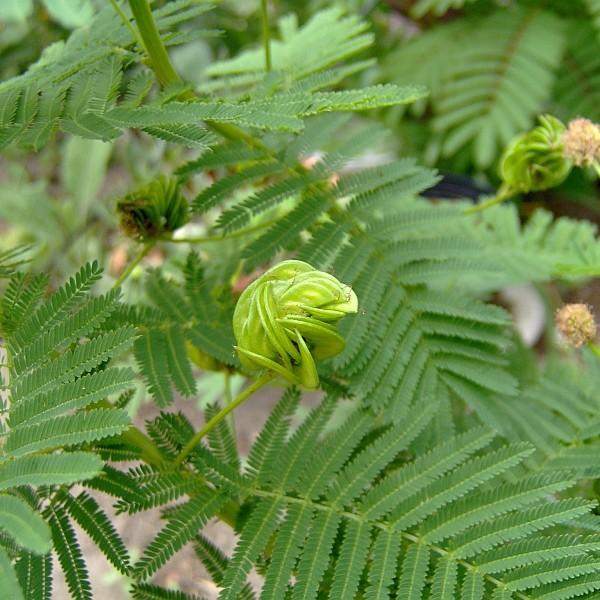
prairie bundleflower
Desmanthus illinoensis
Overview
The prairie bundleflower is an amazing plant species native to the prairie regions of North America. It's a short-lived perennial legume, growing between 1-3 feet tall and blooming hundreds of small white or yellow flowers in late summer. The root of the plant has what is known as a "prairie bundle"-- a mass of specialized roots that can absorb and store large amounts of nitrogen. This allows the prairie bundleflower to thrive in nitrogen-poor soils and is an important biological factor in restoring areas of degraded soil. Its fragrant blooms also attract bees and other pollinators, making it a valuable part of the native prairie ecology.
Care Guide
Watering
The Prairie Bundleflower should be watered when the top inch or 2 of the soil is dry. A plant prefers consistent, shallow watering as oppose to deep, infrequent watering. During the growing season (late spring to early fall), water the plant at least once weekly, making sure to moisten the soil completely. In the winter, water sparingly – once every 2 months is usually sufficient.
Light
Prairie bundleflower (Desmanthus illinoensis) requires full sun to produce and maintain a healthy growth pattern. This species is native to the Midwest and prefers 4-6 hours of direct sunlight per day, preferably during the morning when light is strongest. During the summer months, Prairie bundleflower thrives if it is able to soak up 6-8 hours of sunlight each day. This additional sunshine helps promote long lasting blooms as well as seeds for next season's plants. In the winter, Prairie bundleflower tolerates shade or less sunlight but will still produce healthy growth. Limit watering to less frequent but more deep soakings during colder months.
Temperature
Hardiness zone 5-8.
Pruning
Prairie Bundleflower (Desmanthus illinoensis) can be pruned in the spring when the plant is actively growing and after it has flowered. Pruning should focus on removing dead or damaged stems, as well as shoots that appear weak or out of place. Pruning can also be done to encourage new growth and produce fuller, bushier plants. Depending on the desired effect, light to moderate pruning can be done to encourage the formation of a tight, upright form or to create a more vase-shaped plant. When pruning, careful attention should be taken to not remove too much of the plant at once, as this can harm its health and growth.
Propagation
Seed Propagation, Cutting, Root Division, Layering Propagation
Related plants
Other plants you might like if you grow prairie bundleflower.