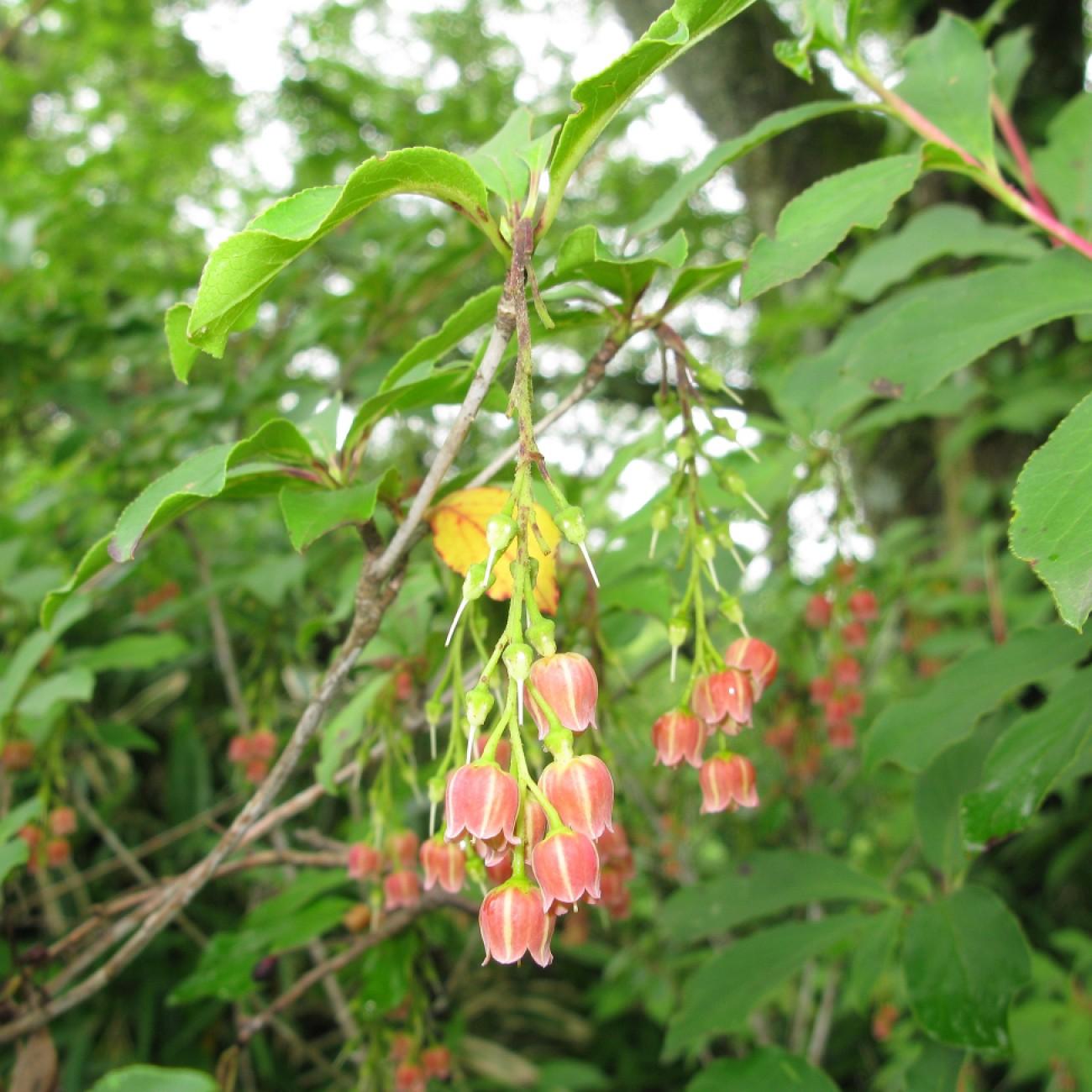
redvein enkianthus
Enkianthus campanulatus var. sikokianus
Overview
Redvein Enkianthus is an amazing flowering shrub with a unique beauty. It features an eye-catching flower consisting of a pink outer petal rimming off a white inner petal, along with bright red stripes that run along the veins of the petals. During the height of bloom in June, this shrub is a stunning presence among other plants in the garden. Its foliage is a contentment of glossy green and furthers its attraction. During autumn, the foliage turns into strikingly beautiful shades of red, yellow and orange. With a compact size and moderate growth rate, this shrub is a prized addition to any garden and will bring long-lasting enjoyment for years to come.
Care Guide
Watering
Redvein enkianthus should be watered every 7-10 days with 1-2 inches of water. It's important to give the plant enough water to wet its entire root system, but not enough to cause the soil to become overly soggy. Water early in the morning, so that the foliage has time to dry off before nightfall. During hot, dry conditions, it's best to increase the frequency of watering. Mulching the soil will also help keep the soil consistently moist and aid in weed control.
Light
Redvein Enkianthus (Enkianthus campanulatus var. sikokianus) is a deciduous, woodland shrub native to Japan. It prefers partial shade and is best grown in light, well-drained soils. Redvein Enkianthus should be planted in an area that receives dappled sunlight throughout the day but is protected from the hot afternoon sun. In general, this plant is best suited for bright, indirect sunlight for around 4 - 6 hours per day.
Soil
Acidic, Humus rich, Well-drained
Temperature
Hardiness zone 4-7.
Pruning
Pruning of redvein enkianthus (Enkianthus campanulatus var. sikokianus) should take place early to mid spring, when buds start to swell and before growth begins. Generally, light pruning is all that is needed, such as removing any dead, diseased, or broken branches, as well as removing any branches to open up the center of the shrub. This can be done annually or bi-annually. Heavier pruning should only be done occasionally, by selectively thinning out some of the shoots to a desirable shape. This can also be done in early to mid spring, but it is important to allow flowering to occur before pruning off the blooming branches.
Propagation
Seed Propagation, Layering Propagation, Stem Propagation
Diseases & Pests
Common pests: Pest resistant, Disease resistant.
Related plants
Other plants you might like if you grow redvein enkianthus.







