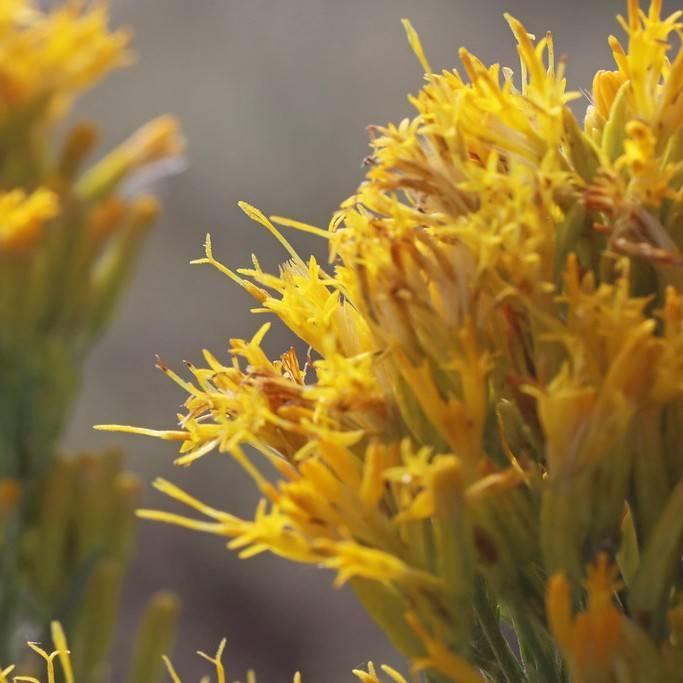
rubber rabbitbrush
Ericameria nauseosa
Overview
Rubber rabbitbrush (Ericameria nauseosa) is an amazing plant species with a variety of uses. It is a drought-tolerant, evergreen shrub that can reach up to 4 feet in height and produces silver-yellow flowers from July to October. It thrives in dry climates and sandy soils that most other plants struggle in. It is an important food source for wildlife, provides erosion control, and its foliage has an aromatic scent. Its bounceback-ability makes it a favorite for xeric landscaping and it is now available in a variety of sizes and colors. Rubber rabbitbrush is an incredibly resilient species that is both beautiful and useful.
Care Guide
Watering
When watering Rubber Rabbitbrush (Ericameria nauseosa), lightly moisten the soil 1-2 times per week during the summer and 1-2 times per month during the winter months. The amount of water needed will vary depending on the environment and climate. The soil should not be completely saturated, but remain moist, allowing for adequate drainage. To ensure proper watering, check the soil with your finger to a depth of 1 inch, if the soil feels dry it is time to water.
Light
Rubber rabbitbrush (Ericameria nauseosa) prefers full sunlight, at least 8 hours of direct sun a day. This plant species is able to tolerate very hot conditions, provided it is given enough water. Since it is native to the southwestern United States, it is best to avoid planting this species in regions where temperatures stay below freezing. As with most plants, rubber rabbitbrush needs its sunlight to grow and flower, so direct sun is essential. Depending on where it is planted, the best time of year for full sunlight exposure will vary. In moderation climates, the midday sun is the best time, as the temperatures are more moderate. In hotter climates, it is better for this species to be exposed to morning sunlight, to avoid heat shocks and dehydration.
Temperature
Hardiness zone 4-9.
Pruning
Rubber Rabbitbrush (Ericameria nauseosa) can be pruned throughout the growing season to maintain its desired shape and size. Prune branches that are damaged, diseased, or dead to encourage new growth. Pruning should also be done if the plant has become overgrown. Without regular pruning, the plant may become thin and weak over time. Pruning should be done in late winter or early spring. This will help reduce the risk of disease and promote regrowth. Start by removing all dead, damaged, and diseased branches and stems. Cut back any stems that are growing in the wrong direction. Prune all stems that are outgrowing other nearby stems. This will help maintain an even shape and avoid congestion. You should also remove any flowers and seedpods to promote further leaf and stem growth. Prune lightly, taking care to keep the plant’s natural shape in mind. After pruning, it is important to apply fertilizer to encourage healthy new growth.
Propagation
Seed Propagation, Seed Propagation, Seed Propagation, Cutting, Layering Propagation, Division
Uses & Symbolism
Attracts: Butterflies.
Related plants
Other plants you might like if you grow rubber rabbitbrush.