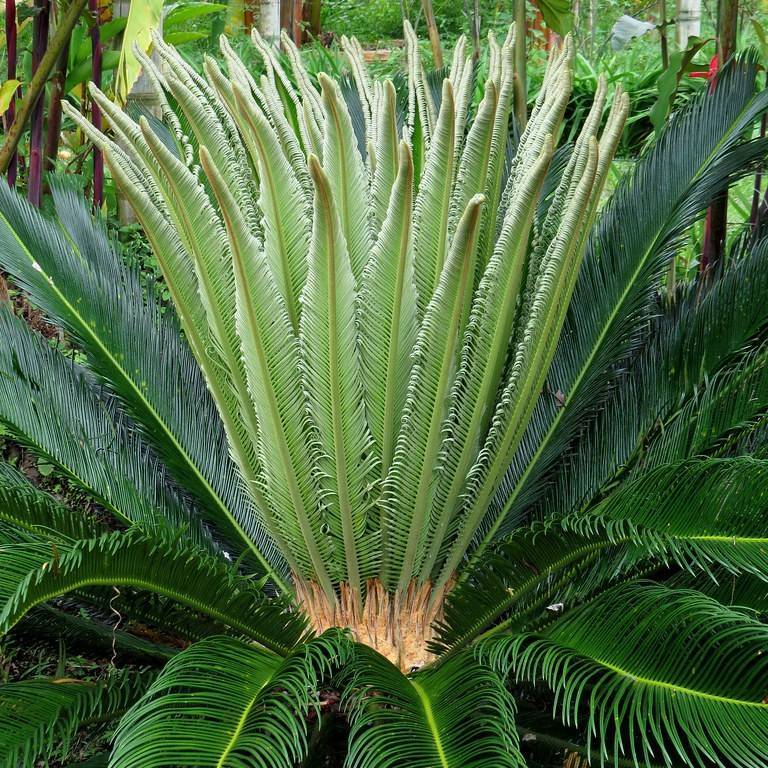
Sago palm
Cycas revoluta
Overview
The Sago palm (Cycas revoluta) is an amazing plant species that is known for its unique fan-shaped leaves and intricate patterns. It requires minimal maintenance and is extremely resilient to harsh weather conditions, enabling it to thrive in both hot and cold climates. This palm is known for thriving in indirect sunlight and requires minimal watering, making it an ideal choice for those who are looking for a low-maintenance plant for their garden or patio. It also looks fantastic when it is well looked after, with its bright green foliage and thick stems. The Sago palm is cleverly designed, being able to absorb large amounts of moisture from its environment even in the toughest of conditions. Overall, the Sago palm is truly an amazing plant species.
Care Guide
Watering
Sago palms should be watered moderately and evenly. Water once per week in spring and summer, providing enough water to moisten the soil around the roots, but avoiding overly wet conditions. In fall and winter months the plants require less water, and should be watered sparingly, as over-watering can damage or kill the plant.
Light
The Sago palm requires full sun or partial shade to thrive. For optimal growth, it needs at least 6 hours of direct sunlight each day, with partial shade in the hottest, sunniest part of the day being beneficial. It needs to be exposed to direct sunlight for the majority of the day in order to increase its chances for optimal growth. In areas of extreme heat, it may fare better if some shade is provided from 11am to 4pm.
Soil
Well-drained
Temperature
Hardiness zone 9-10.
Pruning
Pruning is an important part of caring for a Sago palm, and should be done regularly. Pruning should be done in early spring, typically around the beginning of March. Generally, Sago palms should be pruned back to about 2/3 of the plant's total height. This will help promote new growth and vastly improve the appearance of the plant. Additionally, any dead or damaged leaves should be trimmed away, as well as any flower stalks. Pruning Sago palms back to 2/3 of their initial height encourages the growth of new, lush foliage and helps to keep the plant looking tidy and attractive.
Propagation
Seed Propagation
Diseases & Pests
Common pests: Fungal leaf spot, Mites, Root rot, Scale insects, Pest resistant, Disease resistant, Drought resistant .
Related plants
Other plants you might like if you grow Sago palm.