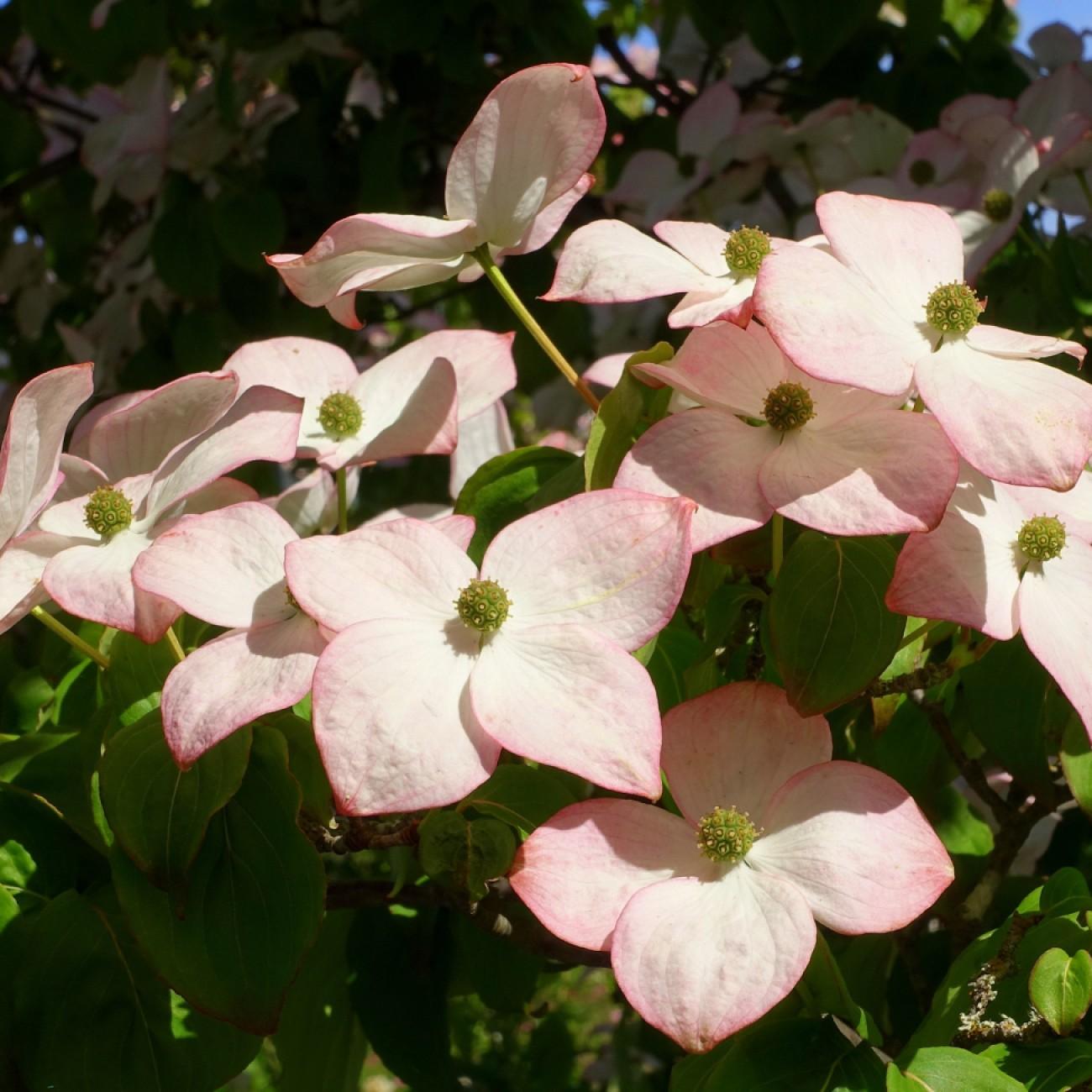
Satomi Chinese Dogwood
Cornus kousa 'Satomi'
Overview
The Satomi Chinese Dogwood (Cornus kousa 'Satomi'), a deciduous shrub, is an amazing landscape addition due to its year-round appeal. In spring its white flowers are stunning and are followed by yellow-green fruit in summer and stunning red-orange leaves in autumn. In winter its unique gray bark sets it apart from other trees. Additionally, this shrub is tolerant to various weather conditions and is disease and pest-resistant. Add this shrub to your garden and you won't be disappointed with its exceptional visual presence.
Care Guide
Watering
Satomi Chinese Dogwood should be watered at least once a week. During periods of drought, it may need to be watered on several days each week. When watering, thoroughly saturate the soil and make sure it is evenly moist. After a few minutes, check to ensure that no water is pooled or sitting in areas where it cannot be adequately absorbed. Avoid overwatering, as this can cause root rot or other damage to the plant.
Light
Satomi Chinese Dogwood should be planted in a location that receives at least 6 to 8 hours of daylight for optimal growth. It is best to avoid siting this plant in a shaded area, as it will fail to thrive in such conditions. The best time of day for the Satomi Chinese Dogwood to take in the daylight is during the morning and afternoon hours, when the sun is brightest.
Temperature
Hardiness zone 5-5.
Pruning
Satomi Chinese Dogwood should be pruned in late winter or early spring before the buds start to swell. Pruning should be light in order to maintain the desired shape and size. Remove any dead, diseased, or damaged branches that may be hazardous. Branches that criss-cross or rub against one another should also be removed for better air movement and increased light penetration. Lightly prune around the perimeter to keep the desired size and shape. An overall light thinning, such as removing 1-third of the oldest and/or thickest branches, will help to open up the canopy and promote better airflow.
Propagation
Grafting Propagation, Cutting, Layering Propagation, Air Layering Propagation, Tissue Culture
Uses & Symbolism
Attracts: Butterflies.
Related plants
Other plants you might like if you grow Satomi Chinese Dogwood.