Sea Buckthorn
Hippophae rhamnoides
Overview
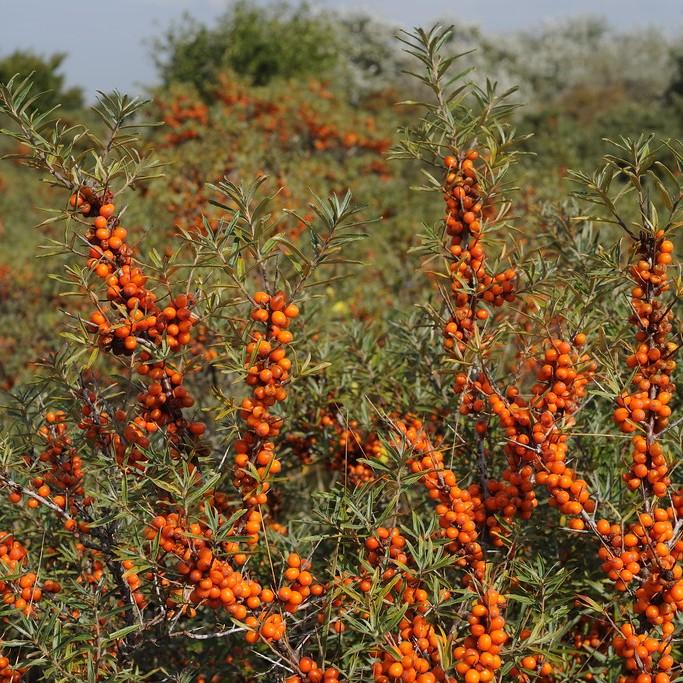
The Sea Buckthorn is an amazing shrub. It is native to the cold, coastal regions of much of Europe, Asia and North America. This hardy species can survive temperatures of -35°C and is known to thrive in difficult terrain, such as sandy beaches, sea cliffs and mountain slopes. The bushes are full of orange berries, rich in Vitamin C, flavonoids and Omega-7. As a herbal medicine they support healthy skin, nails, hair and immune system. Not only this, but Sea Buckthorn berries are a powerful antioxidant and have medicinal benefits for digestive health. Finally, the dense foliage provides shelter for animals, birds and insect species. Sea Buckthorn really is an amazing plant!
Care Guide
Watering
For optimal growth, Sea Buckthorn (Hippophae rhamnoides) requires moderate to regular watering during the growing season (spring through fall). During the summer months, water the plant deeply but less frequently. Depending on the temperature and weather conditions in your area, water every 2 to 3 days. In hotter and drier climates, water more frequently. Reduce your watering to once a week or less once cooler fall temperatures arrive. Make sure to check the soil is still moist before watering Sea Buckthorn. In the winter, Sea Buckthorn will only need occasional watering, maybe once or twice a month. Never allow the soil to completely dry out.
Light
Sea Buckthorn (Hippophae rhamnoides) needs full-sunlight to thrive. It does best in direct sunlight for at least 6 hours per day, though it can tolerate anything from partial sun to full sun. Generally, the more sunny it is, the better this species will do. It is recommended to make sure it can get at least 4 to 6 hours of full sun each day. In addition to the direct sunlight, Sea Buckthorn (Hippophae rhamnoides) needs reflected light from nearby surfaces to help with photosynthesis and fruiting. Therefore, providing it with southeast- or southwest-facing slopes, or near water bodies or large, reflective surfaces, can be advantageous.
Temperature
Hardiness zone 3-3.
Pruning
Sea Buckthorn (Hippophae rhamnoides) is best pruned during dormancy in late winter or early spring, before new growth begins. You can remove up to 1-third of the plant material each year. Start by removing any dead or damaged branches, and then begin thinning the plant by removing the older branches that no longer produce fruit or flowers. This encourages new plant growth and helps maintain a healthy structure. Avoid pruning too much in one season to prevent over-stressing the plant.
Propagation
Cutting, Grafting Propagation, Layering Propagation, Air Layering Propagation, Tissue Culture, Seed Propagation
Related plants
Other plants you might like if you grow Sea Buckthorn.