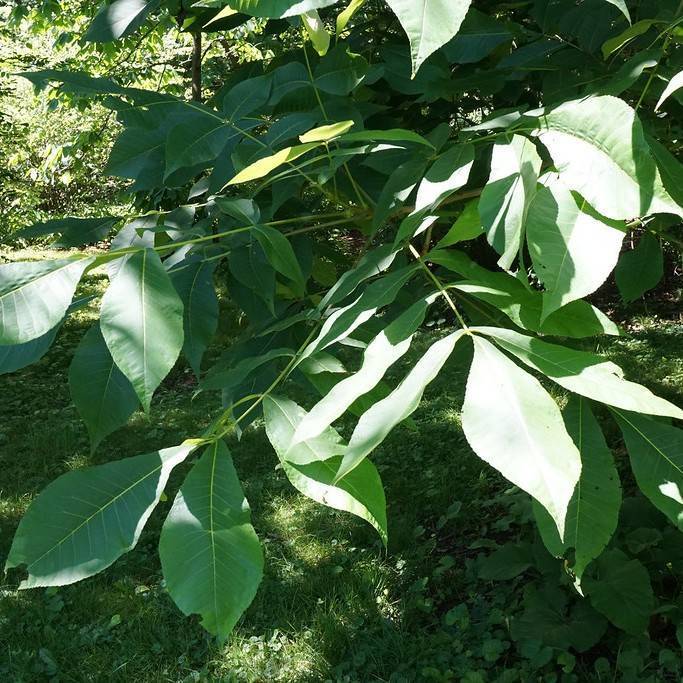
shellbark hickory
Carya laciniosa
Overview
Shellbark hickory (Carya laciniosa) is an incredible tree species that stands out among the hickory family. It is attractive in every season, boasting attractive green leaves in the spring with bright yellow fall foliage. The bark is rough but unique, with big ridges and a bright brown or gray coloring. It is also a great bee tree, providing excellent honey for beekeepers. Shellbark hickory is also noted for its incredibly tough wood, which is the reason it's become so popular for use in furniture, flooring, and even tools. It is a resilient species and is able to withstand drought, cold weather, and flooding. It is no wonder why Shellbark hickory has become so popular; it’s a gorgeous and reliable species with a multitude of uses.
Care Guide
Watering
Shellbark hickory tree is a deciduous species that needs moist, well-drained soil. When watering shellbark hickory saplings, make sure to water the soil slowly and evenly for several minutes until it is moist but not soaked. This can be done 2-3 times per week or more during periods of drought. When the tree is established, water once a week to 10 days during periods of drought. Try to water on an as-needed basis, rather than on a regular schedule, so that the roots will establish themselves more deeply and be more resistant to drought.
Light
Shellbark hickory trees need a great deal of sunlight to stay healthy. They should receive full sun exposure for at least 8 hours a day. In areas with intense summer heat, it is recommended that the trees receive some afternoon shade to protect them from the intense sun. During the autumn, winter, and spring, shellbark hickory trees should receive as much direct sunlight as possible to ensure proper growth and health.
Soil
Sandy Loamy Clay
Temperature
Hardiness zone 5-8.
Pruning
Shellbark hickory (Carya laciniosa) typically does not require pruning, especially when planted in its natural environment. However, if you must prune the tree, it is best to do so in late fall (November or December) after the tree’s foliage has dropped. Prune out any damaged, dead, or diseased branches at this time. If the tree is planted in an urban environment, you can prune severely to keep the tree from growing too large. In this case, begin the pruning about 10 years after planting and then repeat pruning sessions every 3 to 5 years after that. Trim back only about 1-third of the length of the branches at each pruning session. It is important to never remove more than 1-third of the height and length of the tree, unless it is severely overgrown.
Propagation
Seed Propagation, Grafting Propagation, Layering Propagation, Cutting, Budding
Uses & Symbolism
Attracts: Squirrels, Bees.
Related plants
Other plants you might like if you grow shellbark hickory.