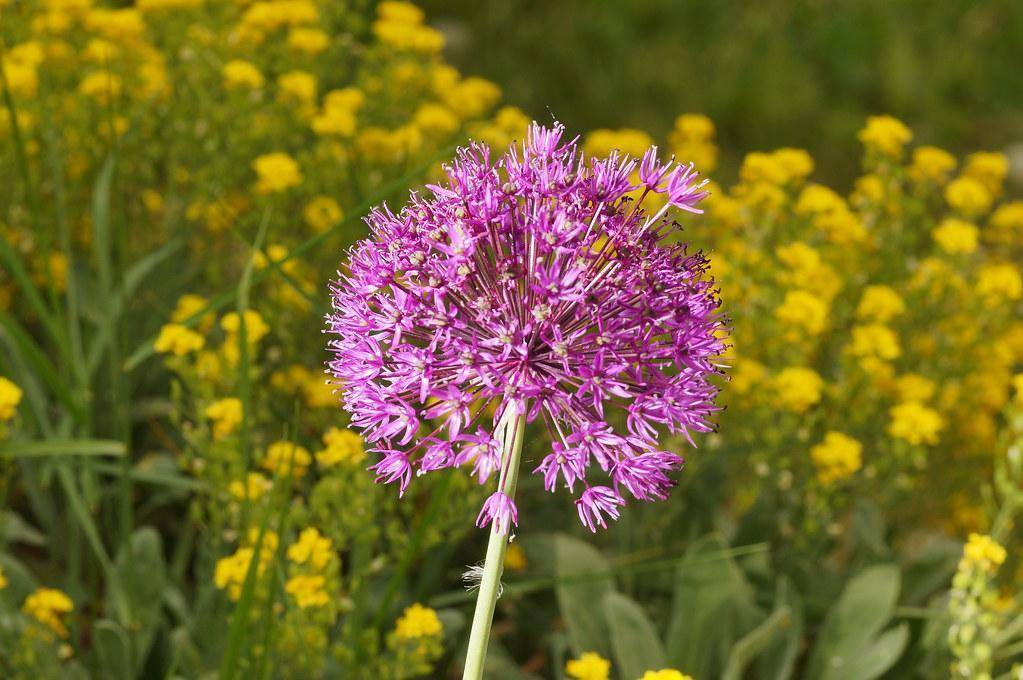
star of Persia
Allium cristophii
Overview
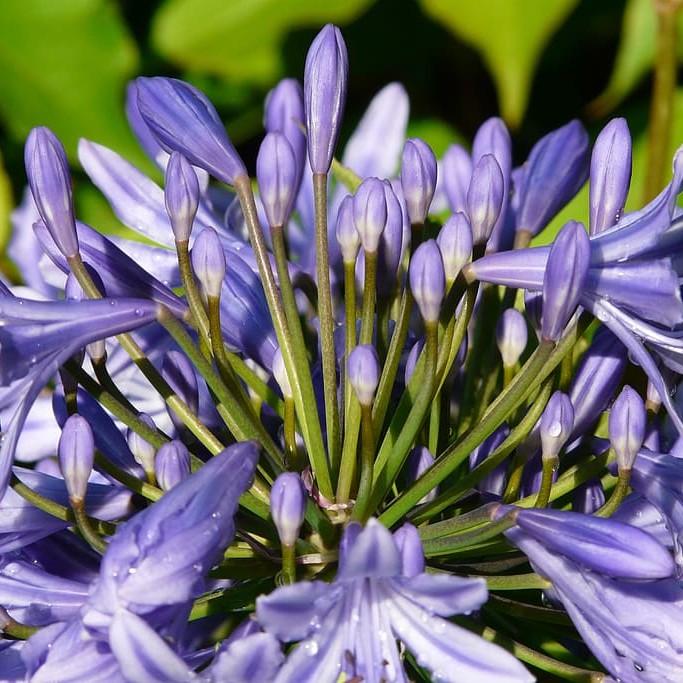
Star of Persia (Allium cristophii) is an amazing plant with tall, 12-18” stalks topped with clusters of up to 100 star-shaped purple blooms, making it a magnificent addition to any garden. Its deep, violet flowers offer a beautiful contrast to lighter colored blooms, creating a stunning summer display. Its petals become darker as they mature and are held above strap-like leaves. Star of Persia is a reliable perennial, perfect for likes and landscapes. Plus, it is deer and drought resistant. Its stunning blooms, sturdy growth, and lasting impact make it a must-have for any gardener looking for something truly special.
Care Guide
Watering
Star of Persia should be watered deeply and infrequently. During the summer, this plant should be watered about once a week, ensuring that the soil is evenly moist. During the spring and fall, the soil should be allowed to dry out and the plant should be watered only when the top inch of the soil has become dry. During the winter, the watering needs should be reduced so that the soil is barely damp, and allowed to dry out more thoroughly between waterings. Keep in mind that in warm climates, your plant may require more frequent watering than in colder ones.
Light
Star of Persia (Allium cristophii) should be grown in an area that receives at least 6-8 hours of direct sunlight daily. In areas with intense summer heat, filter some of the direct sun by planting it in an area with partial shade. If your plant is grown in too little light, it will produce floppy flower stalks and have fewer flowers. Too much sun in the summer months can cause sun scalding, leading to bleached areas of foliage.
Temperature
Hardiness zone 4-8.
Pruning
Star of Persia should be pruned in early spring, before the new growth appears. The goal is to remove any dead flower heads and foliage, as this will encourage new blooms to form. Pruning can also be done lightly in the fall, mainly to thin out the clumps or to remove any extra stems. To thin out the clumps, cut the stems off at the base. For extra stems, pruning should be done so that the shape of the plant is maintained and no more than 1/3 of the foliage is removed at a time. Pruning should not be done too aggressively, as this can damage the plant.
Propagation
Division, Seed Propagation, Offsets, Bulbils
Uses & Symbolism
Attracts: Butterflies.
Related plants
Other plants you might like if you grow star of Persia.