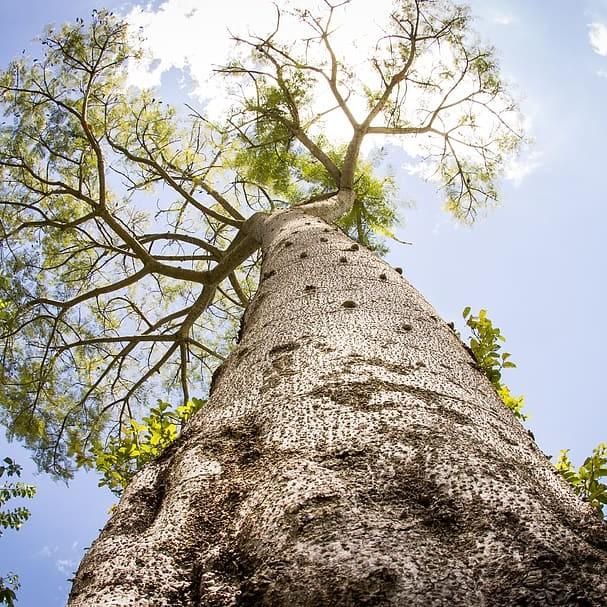
sugarberry
Celtis laevigata
Overview
The sugarberry (Celtis laevigata) is a magnificent deciduous tree that will bring beauty to any landscape. As a fast-growing, hardwood tree, it is well suited to brighten up your yard with lush, dense foliage. Its leaves are bright green in summer and yellow/purple in fall, complemented by showy clusters of white flowers in spring. In fall, the sugarberry produces a sweet, edible fruit with a unique flavor. Its strong, wide-spreading roots help to prevent soil erosion and also add great texture to the garden. The sugarberry is an excellent choice for any area due to its striking beauty and hardiness. It's no wonder this tree is an amazing addition to any landscape!
Care Guide
Watering
Sugarberry plants should be watered weekly, on average. A thorough soak delivered by soaking the soil around the plant’s roots for 1–2 hours is ideal for mature trees. Younger sugarberry plants need to be watered more frequently, approximately every other day. During hot and dry periods, your sugarberry may need to be watered more frequently. As a rule of thumb, apply the equivalent of 1 inch of water per week for mature plants, either through irrigation or natural rainfall. When watering, make sure that the water penetrates several inches down into the soil, to reach the entire root system. Too much water at 1 time can cause root rot, so let the soil dry somewhat before repeating the process. Avoid fertilizing until your sugarberry is established and healthy. Once established however, a light application of fertilizer in the early spring and late summer can help to promote growth and fruit production.
Light
Sunlight is very important to the health and well-being of the sugarberry plant. It prefers full sun, which means it should get 6 to 8 hours of direct sunlight per day. During the hottest times of the year, the plant may need some afternoon shade to protect it from extreme heat and stress. In the winter, the sugarberry can tolerate partial shade and even as little as 3 to 4 hours of sunlight, but its growth and flowering will be diminished. Morning sunlight or east-facing windows are ideal for the sugarberry, as they provide a sheltered, bright environment.
Temperature
Hardiness zone 6-9.
Pruning
Sugarberry trees should be pruned in late winter or early spring. Pruning during the winter when the tree is dormant allows for more vigorous new growth in the spring. This species of tree is typically pruned to remove dead or diseased branches, and to help maintain its vase-like shape. Young trees should be pruned routinely for the first several years to promote a strong, healthy frame. Avoid removing more than 1-third of the existing live branches during the pruning process. If spent flowers and fruits are observed, pruning those at the same time can also be beneficial.
Propagation
Air Layering Propagation, Grafting Propagation, Cutting, Seed Propagation
Uses & Symbolism
Attracts: Birds.
Related plants
Other plants you might like if you grow sugarberry.