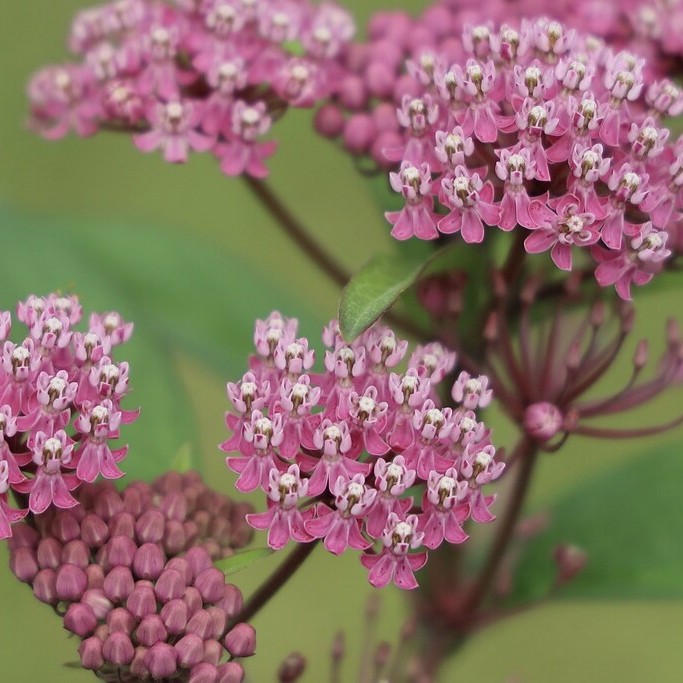
swamp milkweed
Asclepias incarnata
Overview
Swamp milkweed (Asclepias incarnata) is a truly amazing plant species. From its bright pink and white flowers, to its deep green and purple leaves, its visual appearance is stunning. It is also an incredible habitat for butterflies and other insects. Swamp milkweed's long stems are home to caterpillars of monarch and other butterflies, and its abundant nectar provides sustenance for Hummingbirds, bees and other nectar-loving insects. It's fragrant, edible root, when boiled, has many culinary uses, and its natural latex has many medicinal benefits. Its deep root system releases oxygen and nitrogen into the soil, providing oxygen to nearby plants and moisture to shallow wetlands. This incredible species will provide beauty and benefit to any ecosystem!
Care Guide
Watering
Swamp milkweed should be watered well once a week, particularly during the spring and summer months when it is actively growing. During the cooler and drier months of autumn and winter, reduce the amount of water so the soil dries out slightly between watering. Avoid watering the plant too frequently, as this can cause root rot.
Light
Swamp milkweed (Asclepias incarnata) prefers full sun to partial shade. This plant prefers direct sunlight during the morning hours and some amount of shade in the afternoon. This will help protect the leaves from sunburn and reduce water loss through evaporation. In general, swamp milkweed needs at least 8 hours of direct sunlight each day to thrive. During the hottest summer months, it's best to provide some shade during the hottest hours of the day. It may also be advantageous to shelter swamp milkweed from strong winds, which could cause damage to the foliage.
Soil
Sandy Loamy Clay Humus
Temperature
Hardiness zone 3-6.
Pruning
Swamp milkweed should be pruned in late winter or early spring, when the plant has gone dormant. Cut the stems to a height of 8"-12" (20-30 cm). Make sure to remove any dead or damaged leaves, stems, and seedheads. Prune your swamp milkweed plants into a bushy, neat mound. This will promote more flowers and fuller foliage. This species of Asclepias tolerates hard pruning and should be pruned to the ground if necessary.
Propagation
Seed Propagation, Root Cutting, Division, Layering Propagation
Uses & Symbolism
Attracts: Butterflies.
Related plants
Other plants you might like if you grow swamp milkweed.