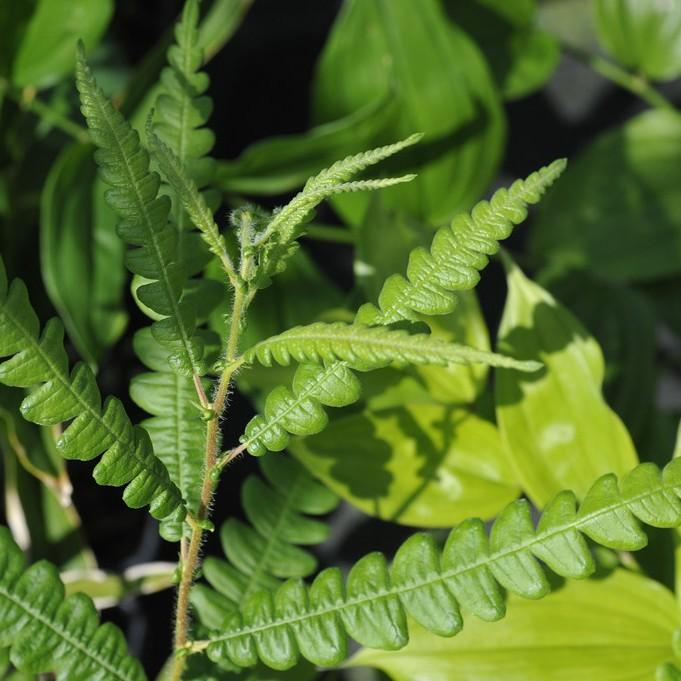
sweet fern
Comptonia peregrina
Overview
Sweet fern (Comptonia peregrina) is an amazing plant species native to North America. Sweet fern has a unique spicy aroma and small, delicate green leaves with a smooth texture. During the summer, it produces small, yellowish–brown flowers. Sweet fern is amazingly adaptive to a variety of conditions, from acidic and sandy soils to clay and hardwood forests. This helps it to populate a variety of habitats, from wet meadows to dry woodlands. Sweet fern is also used for medicinal purposes. The leaves are used to treat a variety of ailments, from colds and coughs to minor skin issues. It's an incredibly versatile and useful plant, as well as the fact that it exudes a pleasant and fragrant smell.
Care Guide
Watering
Sweet fern should be watered once a week. Depending on the weather conditions, you may need to water your plant more often. For example, during hot, dry and windy weather, you should increase your watering schedule. Use room-temperature water and water your sweet fern until the soil is saturated but not soggy. Allow the top layer of soil to dry out between waterings to avoid root rot. Overwatering can cause root decay and can even be fatal to sweet fern.
Light
Sweet fern grows best in sunny, dry conditions and requires full or partial sunlight for best growth and development. For optimal growth, sweet fern should receive approximately 6 to 8 hours of sunlight a day, split up into 2 to 4 hours in the morning and 2 to 4 hours in the afternoon. It may also benefit from being shaded in the hottest part of the day during the summertime. Additionally, sweet fern can tolerate partial shade, and will still grow in areas that receive more than 6 hours of indirect sunlight a day.
Soil
Sandy Loamy Humus Rocky
Temperature
Hardiness zone 2-6.
Pruning
Sweet fern should generally be pruned in late winter or early spring when the new growth begins to emerge. To prune correctly, first remove any dead, damaged, or diseased branches. Then, remove any overcrowded or crossed branches to allow for better air circulation. Finally, if necessary, lightly trim the shrub to the desired shape. Light pruning is recommended to keep its natural shape. Avoid cutting back too much as it can damage the plant.
Propagation
Cutting, Layering Propagation, Division, Seed Propagation
Related plants
Other plants you might like if you grow sweet fern.