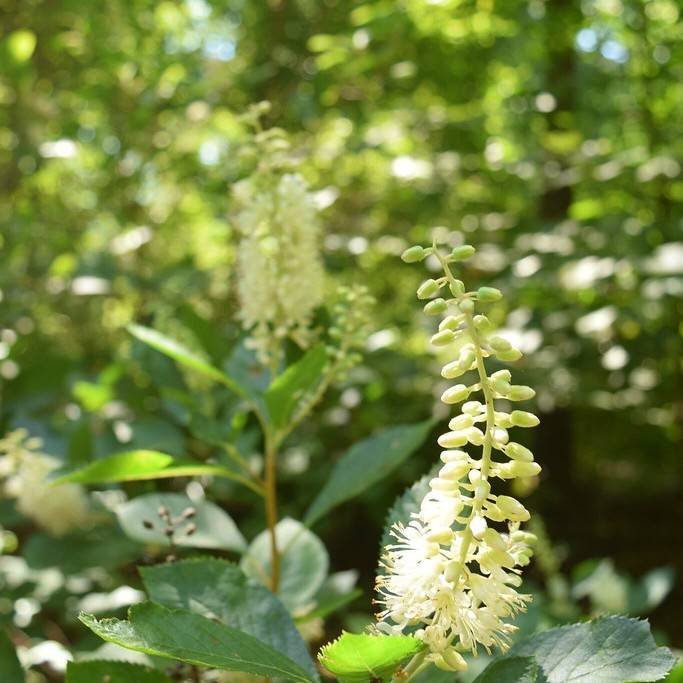
sweet pepperbush
Clethra alnifolia
Overview
Sweet Pepperbush (Clethra alnifolia) has many amazing characteristics that are guaranteed to astound. Easily growing in a variety of soils, this shrub is blessed with the ability to thrive in shallow, marshy, and seaside soil. In summer, the sweetly fragrant white flowers and bright green leaves attract beauty-loving pollinators and brilliant butterflies. These are replaced by yellow-gold fruit in the fall. This deciduous shrub grows 6-12 feet tall, adding graceful verticality and native beauty to garden beds, creating natural boundaries or even functioning as privacy hedges. Its vibrant autumn color will illuminate any courtyard or garden for years to come. Sweet Pepperbush truly is a remarkable species for any garden.
Care Guide
Watering
Sweet pepperbush likes evenly moist soil. Water the plant regularly, approximately every 5 to 7 days as the top 3 inches of soil begins to dry out. Make sure to soak the ground thoroughly, but don't leave the soil soggy for too long. In hotter climates, it may need to be watered more frequently, and in cooler climates, it may need to be watered less often. During winter, reduce the watering schedule and be sure to check the soil moisture levels as the temperatures drop.
Light
Sweet pepperbush is a sun-loving plant species that requires 6-8 hours of direct sunlight each day for optimal growth. This plant prefers the morning sun so it is best to keep it in a location that receives morning sun and is shaded from the hot afternoon sun. Sweet pepperbush plants should be planted in a location that provides consistent exposure to sunlight in order to ensure healthy and lush growth.
Soil
Acidic, Humus rich
Temperature
Hardiness zone 3-9.
Pruning
Sweet pepperbush (Clethra alnifolia) should be pruned once a year during late winter, just before the plants bud. Prune sweet pepperbush back by about 1/3 to 1/2 of its overall size, removing dead, damaged, and crossing branches. Be sure to make each cut close to the branch collar, or the enlarged base where a stem begins. This will allow the plant to rapidly heal and reshoot from the base, giving it the desired shape and density for the next season.
Propagation
Seed Propagation, Cutting
Uses & Symbolism
Attracts: Birds, Butterflies.
Diseases & Pests
Common pests: Pest resistant, Disease resistant, Deer resistant.
Related plants
Other plants you might like if you grow sweet pepperbush.