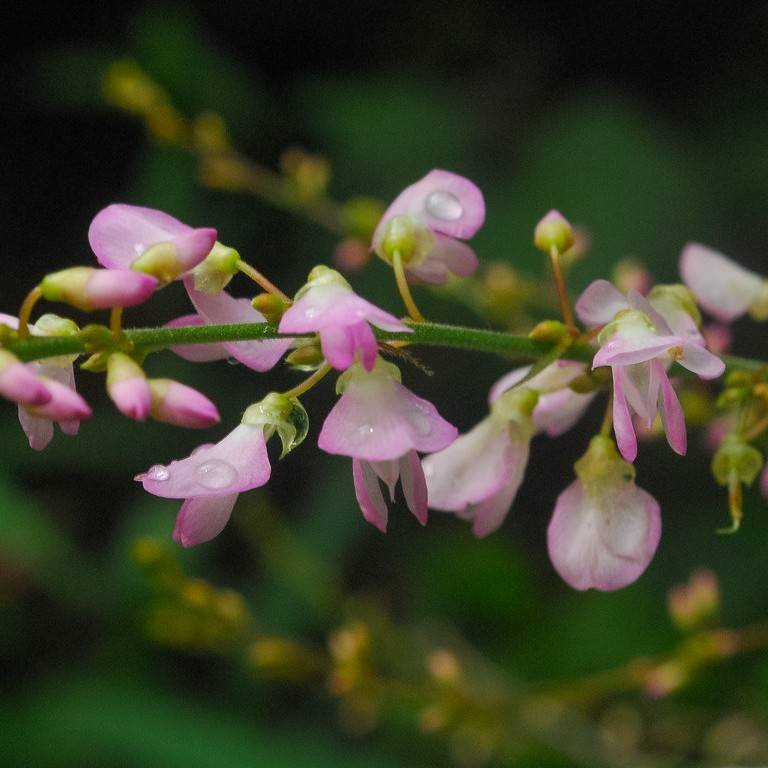
tick-trefoil
Desmodium illinoense
Overview
Tick-Trefoil (Desmodium illinoense) is an amazing native plant species that is found in moist prairies, woodlands, and savannas throughout the midwest. This plant can provide a significant nutrient boost for soil, making it extremely beneficial for surrounding vegetation. It also provides important food and cover for wildlife, serves as a browse for deer and rabbits, and provides nectar for pollinators. Additionally, this species helps prevent erosion by stabilizing soil with its thick taproot. All in all, Tick-Trefoil is an incredible species that provides many benefits to its environment.
Care Guide
Watering
Tick-trefoil (Desmodium illinoense) prefers moist soil and regular watering will help the plant thrive. Generally, this plant should be watered 1 to 2 times a week, depending on the temperature and rainfall. During warm weather with little rainfall (above 85°F (29°C) and less than 1 inch (2.5 cm) of rain per week), you should water this plant more frequently, 2 to 3 times per week. If rainfall increases substantially, reduce the number of times you water to once a week. During cooler weather, you can reduce the amount of water to once every 10-14 days. As with most plants, water at the soil level and avoid getting the foliage wet. It is best to water in the morning so that the plant has time to dry out before nightfall. Wet foliage is more susceptible to disease and fungi. You can check the moisture level of the soil by sticking your finger in the soil. If it is dry, your plant needs water.
Light
Tick-trefoil (Desmodium illinoense) is best grown in full sunlight. It requires at least 6 hours of direct sunlight per day, ideally in a spot that gets morning or early afternoon sunlight. When receiving insufficient sunlight, it may become weak and leggy, with reduced flowering and overall health. It will grow in partial shade, although flowering and seed setting may be reduced.
Temperature
Hardiness zone 4-8.
Pruning
Tick-trefoil (Desmodium illinoense) should be pruned in the early spring before new growth begins. Pruning should take place after all danger of frost has passed; this typically falls between mid-March and mid-April. Pruning should focus on removing dead and damaged branches as well as any that are crossing or rubbing. After this, shaping can be done by selectively removing new growth to encourage branching or to open up the canopy of the plant. Pruning should only remove a third to a half of the new growth each year and only when it is needed.
Propagation
Seed Propagation, Cutting, Division, Layering Propagation
Related plants
Other plants you might like if you grow tick-trefoil.