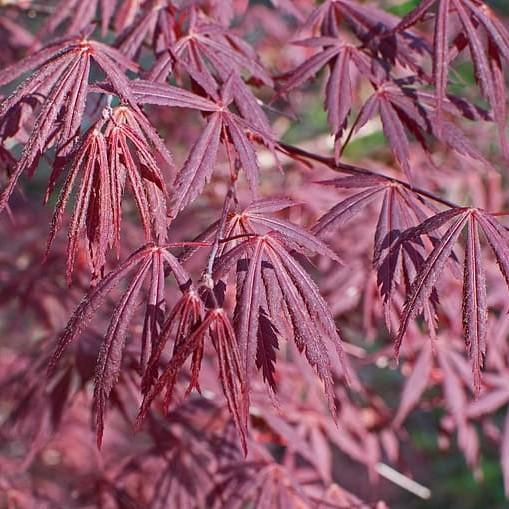
Trompenburg Japanese Maple*
Acer palmatum 'Trompenburg'
Overview
The Acer palmatum 'Trompenburg' is a truly astounding Japanese Maple that offers much to both new and experienced gardeners alike. This variety is a stand-out among its relatives, offering a unique weeping-like structure that epitomizes the Japanese sophistication of a mature garden. Its deep green, sharply pointed leaves turn a magnificent range of shades in the fall, ranging from bright oranges to deep greens and reds. Though it can be grown in a variety of soil types and light conditions, adding a little more attention will truly reward you with a spectacle of foliage unmatched by other trees in your garden.
Care Guide
Watering
Trompenburg Japanese Maples require a moderate amount of water. During the spring and summer, water thoroughly once a week; in the fall, water only every 2 weeks. Make sure to keep the soil evenly moist but not soggy. Check for water by touching the top inch of soil. If it feels dry to the touch, it is time to water. Avoid over-watering, which can cause root rot and other damage.
Light
Trompenburg Japanese Maple plants prefer full to partial sunlight for best growth and foliage color. During the summer months, these plants should be placed in an area that receives at least 6 to 8 hours of direct sunlight every day. During the cooler months of fall and winter, these plants should still receive some direct sunlight, roughly 4 to 6 hours a day. Lastly, during the coldest winter months, these plants should be placed in an area that receives some indirect sunlight in order to ensure good growth and attractive foliage.
Temperature
Hardiness zone 6-6.
Pruning
Trompenburg Japanese Maple (Acer palmatum 'Trompenburg') should be pruned in early spring, shortly before new growth appears. The best time for pruning is when the tree is still dormant, which usually occurs sometime between mid-March and mid-April. Pruning should be minimal, as Japanese maples are slow-growing trees and not typically meant to be shaped or heavily pruned. Focus on removing dead or diseased branches, crossing branches, and any branches that hamper the overall aesthetic desired. If any shaping is desired for the Trompenburg Japanese Maple, then a thorough thinning of all branches should be done by removing no more than 15-20% of the tree's branches. Doing this once each season may be necessary to maintain the desired shape.
Propagation
Grafting Propagation, Layering Propagation, Cutting, Air Layering Propagation, Root Division
Related plants
Other plants you might like if you grow Trompenburg Japanese Maple*.