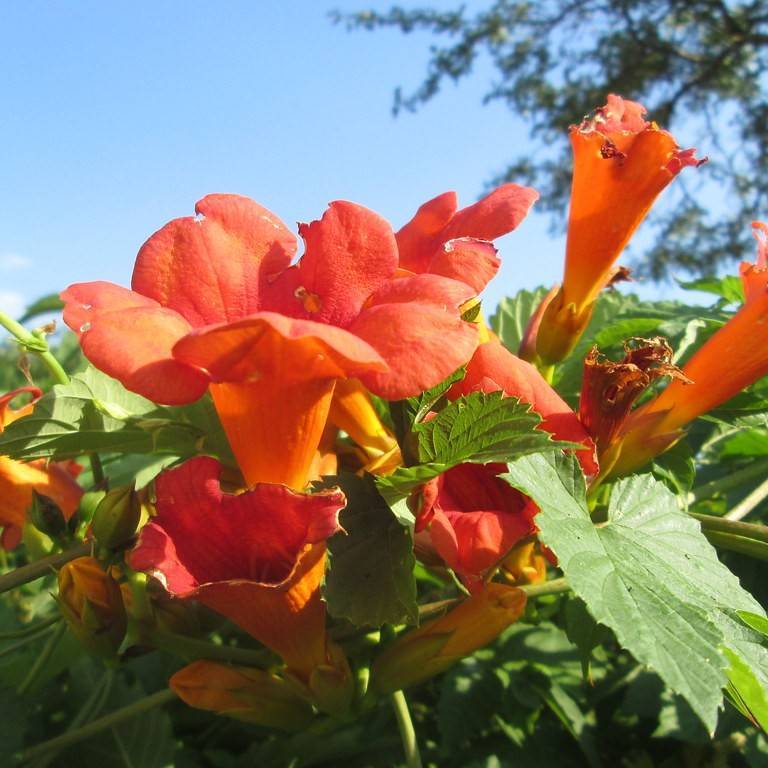
trumpet creeper
Campsis tagliabuana
Overview
The Trumpet Creeper (Campsis tagliabuana) is an amazing climbing vine with a spectacular summer display. The vine produces abundant clusters of red-orange trumpet-shaped flowers that attract hummingbirds and other pollinators. Its bright, bold foliage is a beautiful complement to its gorgeous, fragrant blooms which hang from the vine like garlands. It is an extremely hardy and easy to care for vine and tolerates a wide range of soil conditions and climates. This tough vine is perfect for adding dramatic interest to gardens and trellises, bringing color and sound to windy areas. The Trumpet Creeper is an ideal addition to any garden thanks to its beauty and versatility.
Care Guide
Watering
Trumpet creeper thrive in full sun and require frequent watering during the summer months. Water the plant deeply once or twice a week, making sure to saturate the soil thoroughly. In the winter, reduce watering to once every 2 to 4 weeks. Soil should remain lightly moist, but not soggy. Check soil moisture levels often by sticking your finger in the soil. If the top part of the soil feels dry, it is time to water.
Light
Trumpet creeper (Campsis tagliabuana) prefers full sunlight and should receive at least 8 hours of direct sunlight daily for optimum health and flowering. If grown in a location with partial shade, trumpet creeper may require supplemental lighting or a move to a more sunlit area. This durable vine should be given 4-5 hours of direct sunlight during the hottest part of the day, between 10 am and 2 pm, for optimal growth and flowering. Additionally, trumpet creeper will benefit from the morning hours of sunlight that sets off the day and is generally better for this species with sunlight covering the entire day and if grown in full sun.
Temperature
Hardiness zone 5-9.
Pruning
Trumpet Creeper (Campsis tagliabuana) requires minimal pruning, typically done in late winter or early spring. Pruning should focus on removing dead or crowded branches to open up the center of the plant and encourage the growth of new shoots. Pruning is also done to maintain the desired size and shape of the plant. It’s best to cut back only the tips of each branch in order to retain its natural shape. To determine how much to prune, look for branches that are dead, diseased, or growing toward the center of the plant. These parts should be removed. Pruning the wrong parts of the plant could traumatize the plant and cause it to die.
Propagation
Cutting, Grafting Propagation, Layering Propagation, Seed Propagation
Uses & Symbolism
Attracts: Hummingbirds.
Related plants
Other plants you might like if you grow trumpet creeper.