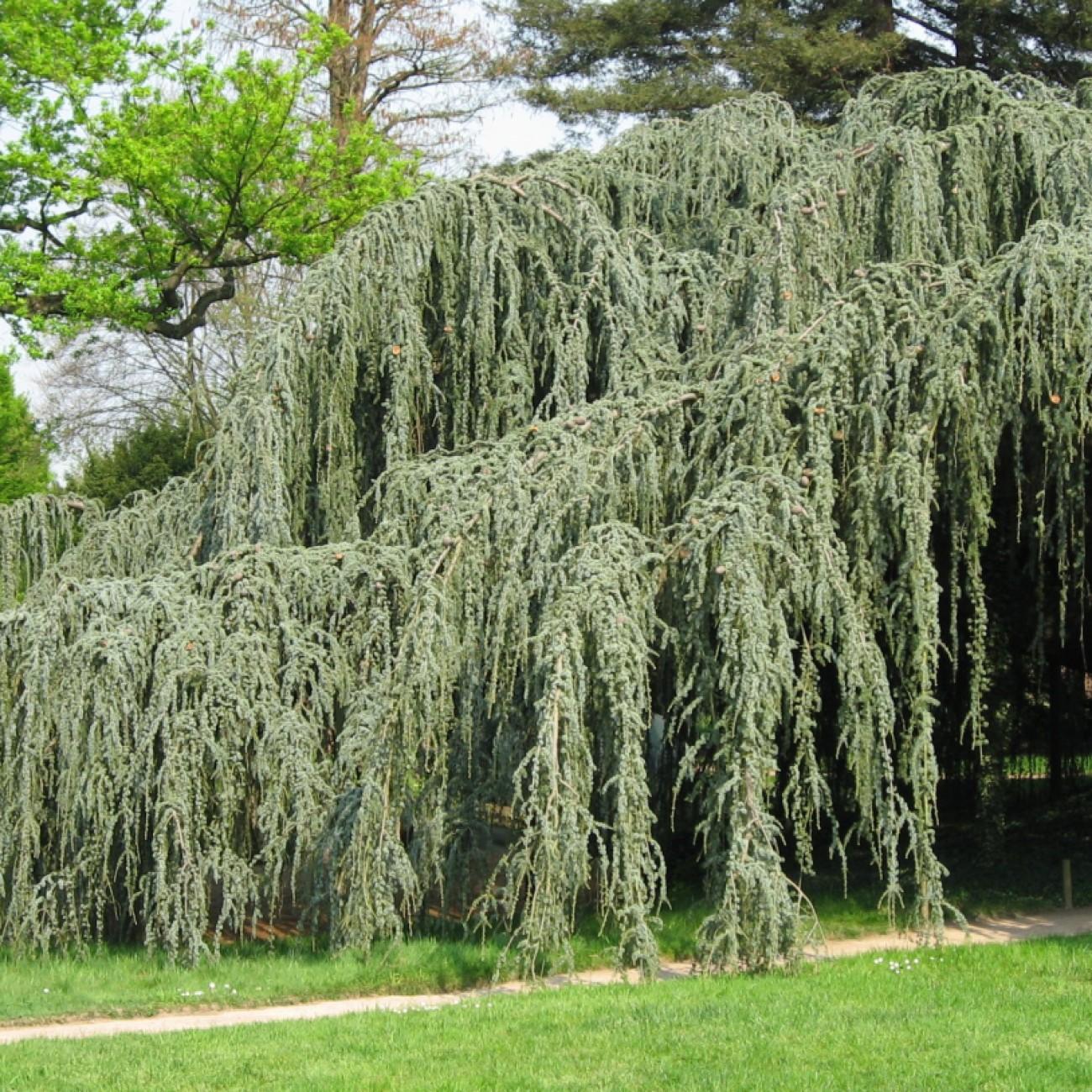
Weeping Cedar of Lebanon
Cedrus libani 'Pendula'
Overview
The Weeping Cedar of Lebanon is an amazing plant species, full of character and grace. It's structure is slim, elegant in shape and content, swaying gently in the wind. Growing up to 30 feet, the branches of the Weeping Cedar of Lebanon twist and turn in dramatic curves, making for an eye-catching specimen. The thin foliage of its delicate needles is a light glaucous green, adding a pleasant canvas to any outdoor area. It's sure to draw everyone's attention and provide you with a unique and stunning piece of nature to admire.
Care Guide
Watering
Weeping Cedar of Lebanon (Cedrus libani 'Pendula') should be watered thoroughly, allowing a few inches of the soil to be completely saturated, and then allowing it to dry out somewhat before watering again. When watering container-grown plants, it is best to water until water starts to run from the drainage holes. This species of tree should be watered approximately once a week during the summer when the soil is dry, and about once every 10 to 14 days during the winter when there is less evaporation. Allowing the soil to go completely dry can cause damage, so it is wise to check the moisture level of the soil every few days. When planted on direct soil, check if the soil is dry to a depth of 2 to 3 inches, if it is, then the tree should be watered.
Light
The Weeping Cedar of Lebanon (Cedrus libani 'Pendula') requires full sun for optimum growth. It should be planted in a location that receives at least 6 hours of unfiltered direct sunlight each day.
Soil
Rocky , gravelly , dry
Temperature
Hardiness zone 6-6.
Pruning
Weeping Cedar of Lebanon should be pruned during the spring or summer months. The amount of pruning needed varies depending on the size of the tree. Generally, it is recommended to prune only around 1/3 of the tree at any 1 time. This will help maintain the overall shape of the tree while removing dead, diseased, or crossing branches. The best way to prune a weeping cedar of Lebanon is to prune slowly and selectively. Care should be taken to avoid cutting too deeply, as this can damage the branches or even kill the entire tree. When finished, follow up with a balanced application of liquid fertilizer to nourish the newly pruned branches.
Propagation
Seed Propagation
Diseases & Pests
Common pests: Blight, needle cast, Pest resistant, Disease resistant, Drought resistant .
Related plants
Other plants you might like if you grow Weeping Cedar of Lebanon.