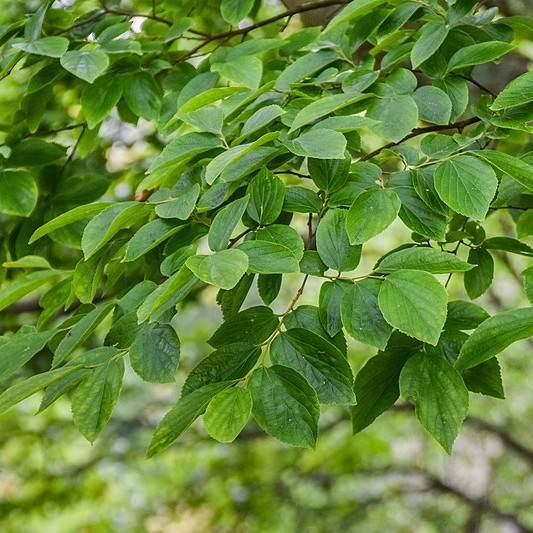
weeping Japanese hackberry
Celtis sinensis 'Green Cascade'
Overview
Weeping Japanese Hackberry (Celtis sinensis 'Green Cascade') is an amazing ornamental tree that makes a stunning statement in the landscape. It has a beautiful cascading form with arching branches that are covered in delicate, heart-shaped bright green leaves. In the springtime it produces clusters of small, white flowers. In the fall, the green foliage turns a rich yellow-gold color. It is a fast growing tree and can reach heights of 30-40 feet in just a few years and its foliage can spread to over 8 feet wide. It is low maintenance and drought tolerant. This tree is ideal for growing in containers or as a feature tree for windbreaks, screens, and privacy hedges. Its unique and beautiful cascading form makes it a great choice in any landscape.
Care Guide
Watering
Weeping Japanese hackberry (Celtis sinensis 'Green Cascade') should be watered when the soil feels dry to the touch. During the growing season, this would likely mean watering once or twice a week. When watering, it is best to thoroughly soak the soil in order for the moisture to reach the deepest roots. During colder months, when growth has slowed, reduce watering to approximately once a month depending on conditions. Unusually dry weather will require more frequent watering, while more rain will need less.
Light
Weeping Japanese hackberry (Celtis sinensis 'Green Cascade') prefers to grow in full sun and can tolerate some shade. It will do best in areas that get at least 6 hours of direct sunlight per day. It can also tolerate areas that get partial shade for part of the day. Depending on your climate and the season, the plant may need more or less sunlight to thrive. In general, it is best to keep this plant in an area that gets consistent direct sunlight throughout the day.
Temperature
Hardiness zone 7-9.
Pruning
Weeping Japanese hackberry (Celtis sinensis 'Green Cascade') should be pruned from late winter to early spring. It will benefit from light pruning throughout the year, but it’s best to avoid major pruning during winter dormancy. When pruning, it’s important to not remove more than 25% of the branches at a time, as this can stress the plant. Properly prune shoots that are growing out of the desired shape, and make sure to remove any dead or diseased material. If you choose to cut back the canopy of your Weeping Japanese hackberry by more than 25%, it’s best to do it in stages over the course of a few years.
Propagation
Air Layering Propagation, Grafting Propagation, Cutting, Seed Propagation
Uses & Symbolism
Attracts: Birds.
Related plants
Other plants you might like if you grow weeping Japanese hackberry.