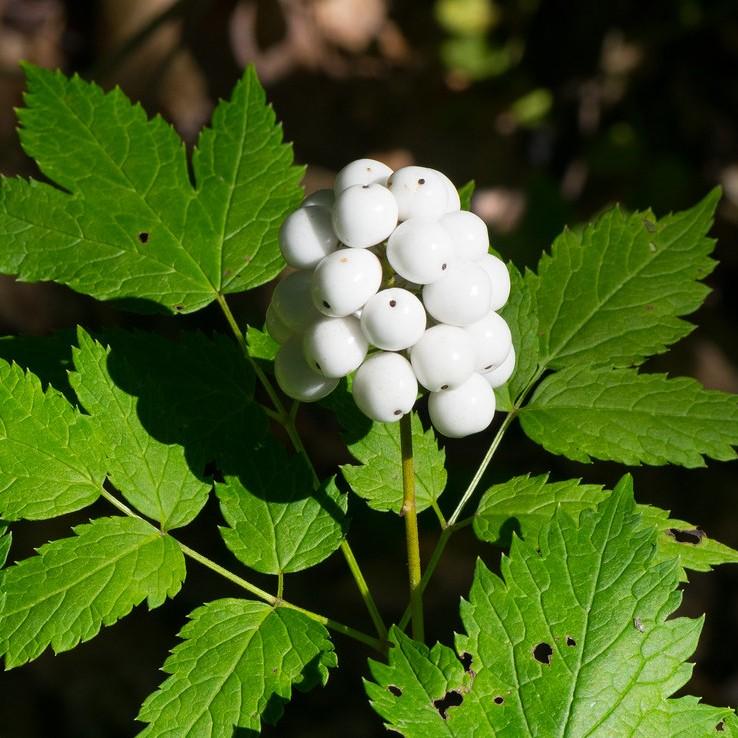
white baneberry
Actaea pachypoda
Overview
White Baneberry is an amazing plant species for many reasons. It's a perennial herbaceous flowering plant found in dense woods in North America, making it a beautiful part of any woodland garden. Its foliage is composed of divided leaflets under bright green star-shaped flowers, and its white fruits, which hang like miniature Chinese lanterns, are one of nature's most striking displays. The sight of pollinators gathered around the white fruits is a scene of beauty. White Baneberry's white compound clusters of flowers in summer, feathery foliage in shades of green, and unique bunches of creamy-white fruits make it a showstopper and integral part of any garden.
Care Guide
Watering
Water white baneberry plants on a regular basis, aiming to keep the soil evenly moist. The best time to water is in the morning, when the foliage has had a chance to dry since the previous evening. Depending on your climate, you may need to water the plants every few days in the summer and every 1-2 weeks in the winter.
Light
The white baneberry plant needs direct sunlight for at least 6 hours each day for optimal growth and to maintain good health. Without enough sunlight, the plant will start to become unhealthy and droopy. The white baneberry prefers a spot that is partially shaded from the direct sunlight. The best sunlight exposure is one that will provide the plant with direct sunlight in the early mornings and late afternoons, while being more sheltered from the intense midday sun.
Soil
Humus rich, Well-drained
Temperature
Hardiness zone 3-8.
Pruning
Regular pruning helps maintain a neat, tidy growth habit and encourages new stems and foliage. White baneberry should be pruned annually, in early spring, to remove dead or diseased wood and to control its size. When pruning white baneberry, the stems should be cut just above a bud. This will encourage new growth and help maintain a manageable size. Pruning late in the season can encourage new growth that will be killed by cold temperatures. Before pruning, it’s important to take a good look at the plant to identify potential problem areas and potential hazards. White baneberry branches can snap easily if handled too harshly, so be careful when handling the stems. Prune away any dead or diseased wood, as well as any crossing branches that are competing for light and space. This will help keep the plant healthy and encourage strong new growth.
Propagation
Division
Uses & Symbolism
Attracts: Birds, Butterflies, Bees.
Diseases & Pests
Common pests: Pest resistant, Disease resistant.
Related plants
Other plants you might like if you grow white baneberry.