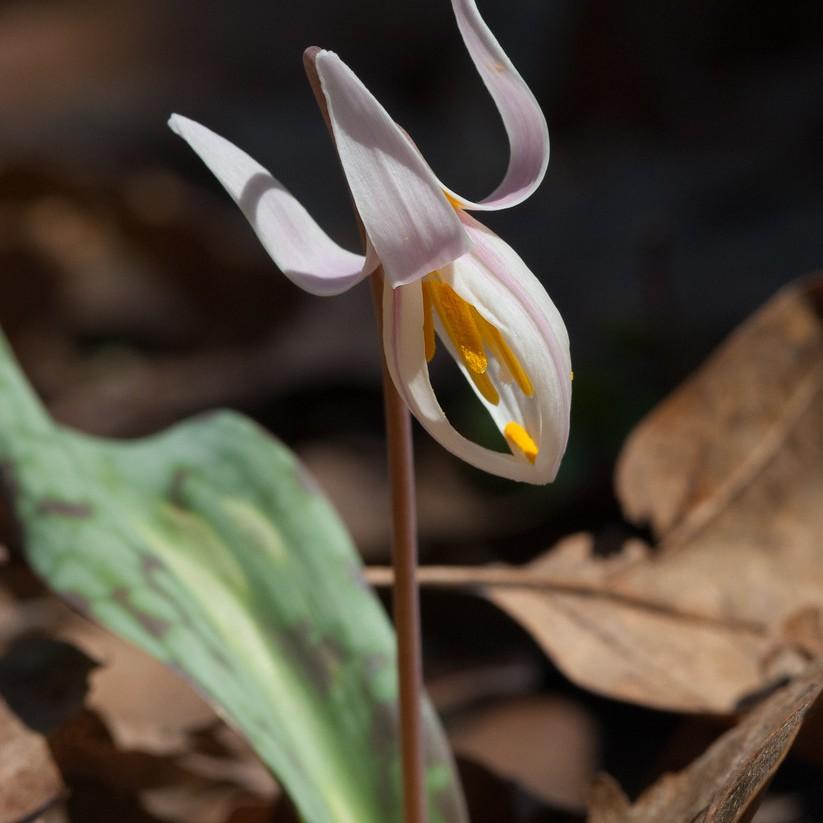
white dog's-tooth violet
Erythronium albidum
Overview
The white dog's-tooth violet (Erythronium albidum) is an amazing plant species for many reasons! It is known for its stunning beauty and captivating white, yellow, and purple blooms that make it an eye-catching addition to your garden. Its blooms appear in early spring, ushering in the new season. Not only is it beautiful, but it's incredibly resilient and can do well in most climates. Its foliage is fragrant and deer-resistant. It can be used to create a captivating focal point in flower beds, borders, and other areas of the garden. Overall, the white dog's-tooth violet is sure to add a unique, cheerful element to any garden.
Care Guide
Watering
The white dog's-tooth violet (Erythronium albidum) requires watering twice a week during the active growing season, spring and summer. Water moderately so the soil is kept evenly moist but not soggy. Allow the soil to dry a bit between waterings. During the dormant season, late autumn through winter, water only enough to keep the soil slightly damp. Over-watering can cause root rot or other issues with this plant species.
Light
White Dog's-Tooth Violet is a perennial plant species well suited for partial to full shade. It typically requires 5-6 hours of sunlight per day during the growing season, and somewhat less during winter months. It can tolerate more direct sunlight as long as its soil stays moist. Full sun exposure during summer months is not recommended. The best "light" for this species is 1 that is filtered and diffuse.
Temperature
Hardiness zone 3-8.
Pruning
White dog's tooth violets should generally be pruned in the springtime after the blossoms have faded. This can occur any time from late April to late May, depending on your local climate. Pruning should involve removing any wilted foliage and spent flowers. Always use a sharp pair of pruners to perform this step, as these violets have delicate foliage. Pruning back more than a third of the foliage can weaken the plant and could potentially kill it, so pay attention to how much you are snipping off. Additionally, removing any roots or excess foliage can help open up the root system and encourage more vigorous growth.
Propagation
Division, Seed Propagation, Cutting, Layering Propagation
Related plants
Other plants you might like if you grow white dog's-tooth violet.