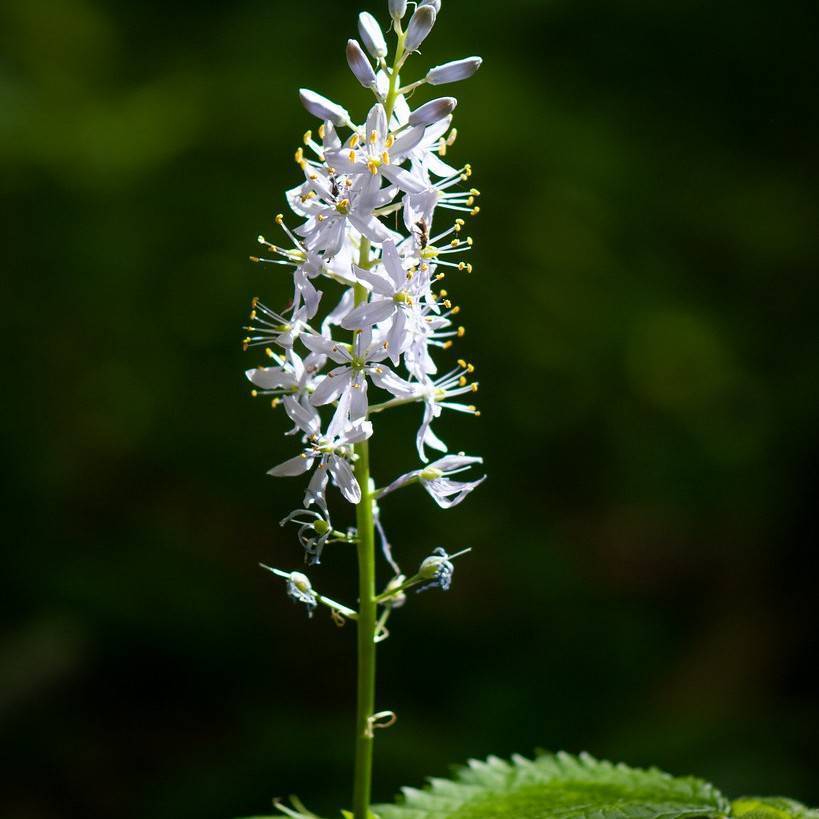
wild hyacinth
Camassia scilloides
Overview
Wild Hyacinth, or Camassia scilloides, is an amazing plant species that blossoms early in the spring and provides a stunning display of purple, white, and blue starburst flowers. Its narrow, grass-like leaves also add texture and color to the surrounding area. This native species is comparatively drought-tolerant compared to other garden flowers, and will continue to grow and bloom for years without needed to be replanted. Wild Hyacinth is also a great pollinator attractor that will wow any outdoor space with its effortless beauty and rarity.
Care Guide
Watering
Wild hyacinth requires moist soil during the warm summer months, and it should be watered deeply. It is essential that the soil doesn't dry out too much, so ensure regular watering. A general rule of thumb is to water thoroughly on a weekly basis, but check the soil moisture to determine how often you should water. This will depend on the weather conditions and how much the soil has dried out. During hot and dry weather, wild hyacinth may need to be watered twice a week.
Light
Wild hyacinth is best grown in an area with full sun, ideally 8-10 hours of sunlight a day. It can tolerate some partial shade, but full sun will help produce the best blooms. It prefers moist, well-drained soil, and will bloom from late spring to mid-summer. With its preference for full sun and well-drained soil, wild hyacinth is an ideal choice for gardens with hot and dry climates.
Soil
Clay, Sand, Humus Enriched
Temperature
Hardiness zone 4-8.
Pruning
Wild hyacinth can be pruned in late winter or early spring before it begins to bloom. Pruning should be minimal, as wild hyacinth does not require extensive pruning. By removing any dead or discolored leaves, and gently removing faded flowers, it helps to maintain a fresh, tidy look in the garden. It is also important to prune off any fruited stems, by cutting them back to a junction with a healthy stem. Doing so prevents the plant from expending too much energy, ensuring the best bloom the following season.
Propagation
Division, Seed Propagation, Cormlet Propagation, Offsets
Uses & Symbolism
Attracts: Butterflies, Bees.
Related plants
Other plants you might like if you grow wild hyacinth.







