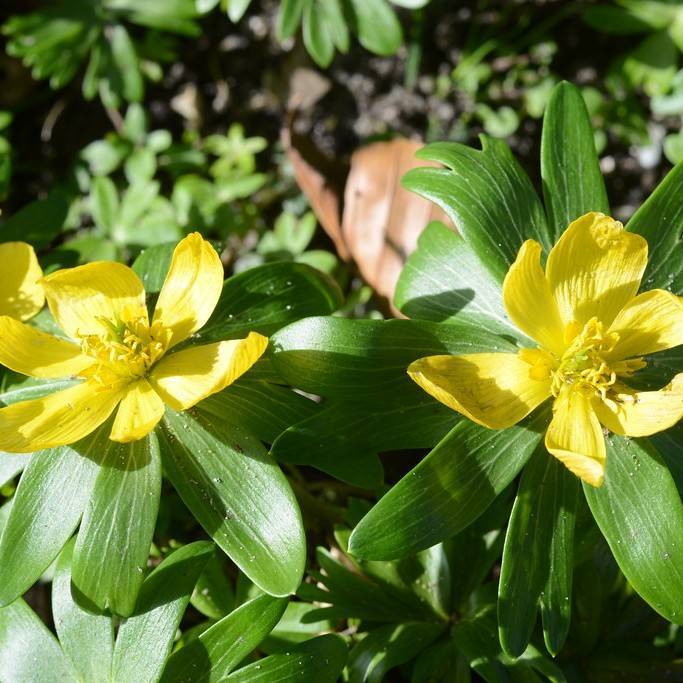
winter aconite
Eranthis hyemalis
Overview
Winter Aconite (Eranthis hyemalis) is the perfect springtime flower as it blooms in late winter and early spring. Its bright yellow petals create a unique display in the garden. A hardy and easy-to-grow species, Winter Aconite is known for its spreading habit and for being deer resistant – a must for the nature garden! This small perennial provides a cheerful splash of colour as the days start to get longer. Winter Aconite is also very low maintenance and works great as part of a naturalistic planting combination. Not only is it beautiful to look at, but Winter Aconite is the perfect early-season nectar and pollen source for bees and other pollinators. Plant Winter Aconite and enjoy its brilliant yellow colour and calming aroma in the garden!
Care Guide
Watering
Winter aconite needs to be watered when the soil is slightly dry. On average, water every 5-7 days in the spring when new leaves begin to appear. Once the summer months arrive, reduce watering to every 10-14 days. Winter aconite should dry out completely in the fall before the ground freezes, so be sure to stop all irrigation at that time.
Light
Winter aconite (Eranthis hyemalis) is a hardy plant species which can tolerate partial to full sun exposure and is best planted in early to mid-spring. During the summer months, winter aconites prefer full sun exposure in the mornings, and some dappled sun exposure in the afternoons. In winter, they will require partial sun, with some protection from harsh winds. The amount of sun needed for winter aconites can vary, depending on the specific species, location, and climate in which they are planted. Generally, they prefer an average of 5 to 8 hours of sunlight per day.
Temperature
Hardiness zone 3-7.
Pruning
Winter aconite should be pruned after flowering is finished in early spring. Pruning for winter aconite should be light, as this plant is only a few inches tall. When pruning, take care to cut away any dead or damaged leaves. This will help promote healthy, vibrant foliage. It is also important to remove any wilted flowers and seed pods. Doing this will prevent the plant from self-seeding and taking over an area.
Propagation
Division, Seed Propagation, Root Cutting, Layering Propagation
Related plants
Other plants you might like if you grow winter aconite.