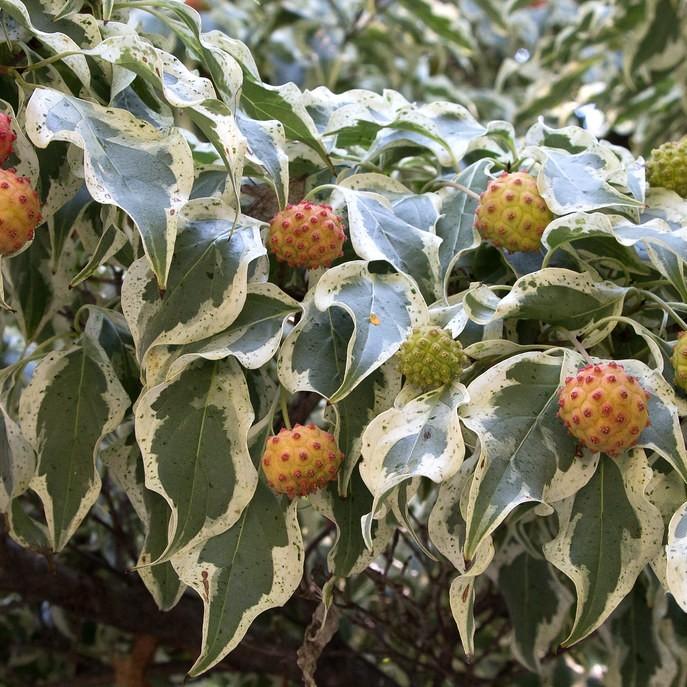
Wolf Eyes Chinese Dogwood
Cornus kousa 'Wolf Eyes'
Overview
The Wolf Eyes Chinese Dogwood (Cornus kousa 'Wolf Eyes') is amazing due to its unique features. With its double-white blooms and distinctive foliage, this two-tone dogwood is sure to impress. Not to mention its eye-catching name and the Wolf Eyes, bright yellow eyespots all over its deeply veined foliage, which contrasts mesmerizingly against its cherry-red stems. Moreover, its remarkable flowering and fruiting characteristics, and its tolerance to a wide range of soil types, make it an excellent and attractive choice for a garden centerpiece or as a hedge or screen.
Care Guide
Watering
The Wolf Eyes Chinese Dogwood (Cornus kousa 'Wolf Eyes') requires regular watering in order to thrive. During the first growing season, keep the soil evenly moist but not soggy. As the plant matures, gradually reduce the amount of watering to allow the top few layers of soil to dry out between watering. The ideal watering frequency for the Wolf Eyes Chinese Dogwood should be 1-2 times per week during the growing season and no more than once per week during the winter months. Be sure to check the soil to see if the plant is in need of additional water, especially during prolonged dry spells or periods of extreme heat. If the soil feels dry to a depth of 1 inch, then the plant should be watered.
Light
Wolf Eyes Chinese Dogwood (Cornus kousa 'Wolf Eyes') does best when grown in full sun or part shade exposure. In full sun exposure, this plant needs at least 4-6 hours of direct sunlight per day. Wolf Eyes Chinese Dogwood should not be allowed to remain in dense shade. Too much shade can lead to a weak and unhealthy plant. Keep in mind that the amount of sunlight your plant needs may vary depending on the season and your climate.
Temperature
Hardiness zone 5-5.
Pruning
For Wolf Eyes Chinese Dogwood, pruning should take place once a year, preferably in mid- to late-summer. Pruning should be minimal, removing only dead, diseased, and damaged branches, plus any additional growth that is crowding or competing for light and air. Avoid cutting into the old wood as this can encourage die-back. Be sure to sterilize pruning shears before and after each cut, to prevent the spread of disease.
Propagation
Grafting Propagation, Cutting, Layering Propagation, Air Layering Propagation, Tissue Culture
Uses & Symbolism
Attracts: Butterflies.
Related plants
Other plants you might like if you grow Wolf Eyes Chinese Dogwood.







