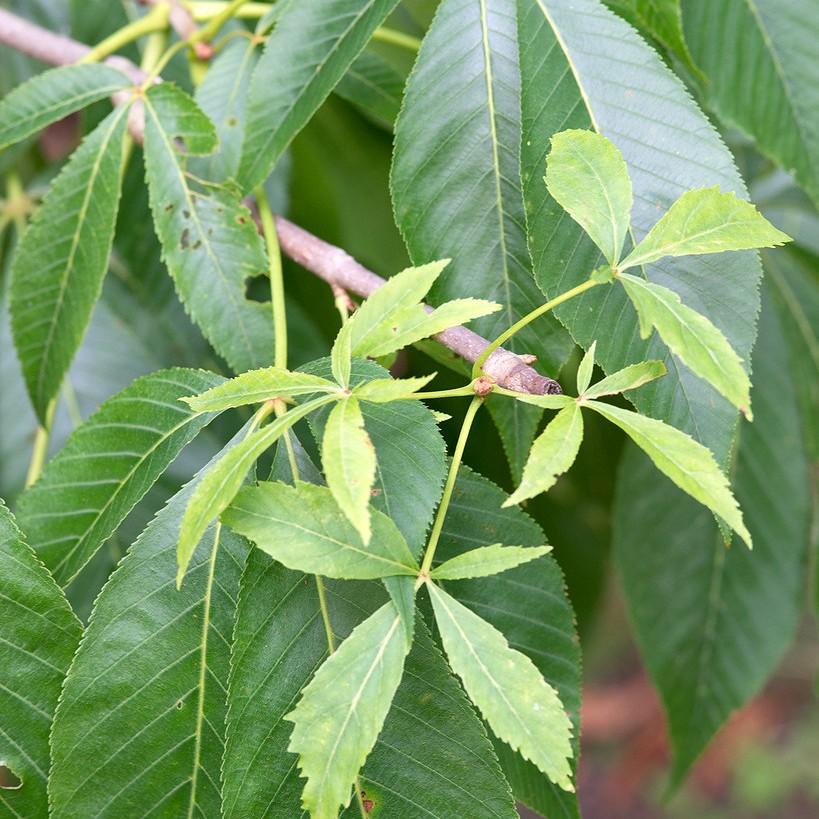
yellow buckeye
Aesculus flava
Overview
The yellow buckeye is a deciduous tree native to the United States. Its name comes from its bright yellow-green buds, which open to become large panicles of fragrant yellow flowers in spring. The foliage is a mix of dark yellow-green, giving it an especially vibrant look. Its fruit is a large, round, brown nut with a distinctive beaklike point at its tip. Its hardiness allows it to thrive in a range of soil and climatic conditions, with yellow buckeyes often found in open woodland, riverbanks, and gardens. With its bright yellow blooms, hardy nature, and large, interesting nuts, the yellow buckeye is a delight to behold and a great choice for any garden!
Care Guide
Watering
Because yellow buckeyes are native to wet, wooded areas, they are very tolerant of moisture and will thrive with regular irrigation. Water your yellow buckeye deeply and thoroughly to saturate the soil to a depth of 12 inches when the soil feels slightly dry to the touch. The frequency of watering will depend on your local climate, but in general, aim to water your yellow buckeye once a week during the growing season and once every 2 to 3 weeks during the winter.
Light
The Yellow Buckeye tree grows well in areas that have full sun or partial shade. It requires at least 6 to 8 hours of direct sunlight per day. It will also benefit from some afternoon shade to protect it from the hot summer sun. It is not necessary to keep this tree in total shade but too much sunlight will scorch and damage its foliage. It is best to provide the right amount of light in the morning and afternoon to keep this tree as healthy as possible.
Soil
Humus rich
Temperature
Hardiness zone 4-8.
Pruning
Pruning a yellow buckeye should occur once a year in the spring or early summer. It should be pruned to maintain size and shape, and also to remove any dead or diseased branches or growth. In general, yellow buckeyes should be pruned no more than 25-30% of their total volume. Make sure not to remove more than this as it can cause stress to the plant and could potentially kill it. If the desired size of the plant is reached, there is no need to prune the plant anymore, as long as the dead and diseased branches are removed.
Propagation
Seed Propagation
Diseases & Pests
Common pests: Pest resistant, Disease resistant.
Related plants
Other plants you might like if you grow yellow buckeye.